The good news
Three of the top five presentations at the plenary session of the annual ASCO meeting could potentially impact lung cancer treatment. These presentations typically spotlight major findings that should be heard by the entire group of attendees.
The results of two lung cancer trials – LIBRETTO-432 and HARMONi-6 – were presented along with a very important pancreatic cancer study, RASolute 302.
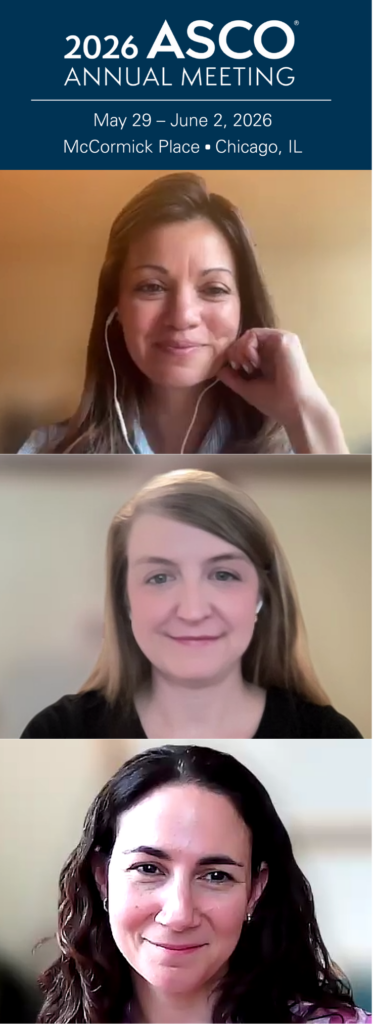
Together Separately livestream
Watch the recording of our June Together Separately livestream, which covered lung cancer news from the 2026 ASCO meeting.
LIBRETTO-432
Why it’s important
LIBRETTO-432 is a study that evaluated selpercatinib in patients with early-stage RET fusion-positive (RET+) non-small cell lung cancer (NSCLC) who had already completed surgery or other local therapy, like radiation and in some instances chemotherapy. Selpercatinib is an oral RET inhibitor approved for the treatment of advanced RET+ NSCLC. RET fusions occur in 1-2% of patients with lung cancer, usually adenocarcinoma, and is more common in younger individuals with little to no smoking history. The goal of this trial was to determine whether this targeted therapy, selpercatinib, given to patients with early stage (1B-3A) RET+ lung cancer in the adjuvant setting (or after surgery) could reduce the risk of the cancer returning. The study found that at 24 months, the Event-Free Survival (time from start of treatment until disease progression or death from any cause) was 91.5% with selpercatinib and 61.1% with placebo – a clinically meaningful difference.
What it means for patients
Selpercatanib is already being used in advanced RET+ NSCLC. It now can be used in patients with earlier stage cancer after local treatment with surgery or radiotherapy to help control the cancer for a longer period of time. This represents another major advancement in the treatment of RET+ lung cancer, and selpercatinib joins other targeted therapies (specifically, osimertinib in EGFR-mutated lung cancer and alectinib in ALK-positive lung cancer) for the treatment of early-stage disease. Side effects of treatment were as expected with no new concerns. Overall survival results are awaited but it is likely that the survival advantage for selpercatinib treatment will be maintained.
What to look for
The LIBRETTO-432 trial will change clinical practice in the treatment of early-stage RET+ lung cancer. Questions still remain when using targeted therapy as adjuvant treatment after surgery or radiation. For example: What is the role of chemotherapy? How long should a patient be treated? Hopefully, future trials will give us answers to these questions.
HARMONi-6
Why it’s important
Ivonescimab is a bispecific antibody (a type of treatment designed to attach to two different targets at the same time) that blocks both PD-1 and vascular endothelial growth factor (VEGF). Blocking PD-1 reverses the suppression of the immune system, and blocking VEGF disrupts the formation of the blood supply to the cancer. In the HARMONi-6 trial, over 500 patients with advanced squamous cell cancer received either ivonescimab and chemotherapy, or tislelizumab (immunotherapy) plus chemotherapy. After nearly 2 years of follow-up, patients who received ivonescimab and chemotherapy lived 4 months longer than those who were treated with immunotherapy and chemotherapy.
What it means for patients
Ivonescimab is not yet approved for treatment in the US. The HARMONi-6 trial was performed entirely in China with a population of more male, younger patients. Thus, we await results from a large global study with a more diverse population. The side effects associated with immunotherapy and chemotherapy are well known, and no new problems were seen. Because it blocks VEGF, ivonescimab can cause additional side effects such as hypertension (high blood pressure), bleeding, and protein in the urine – however, all of these were low grade and easily manageable. This trial is of particular importance considering no prior significant advances have been made to treat patients with squamous cell lung cancer, and this remains an area of great need.
What to look for
We await the results of additional trials with ivonescimab to see if it will continue to benefit and advance the treatment of patients with squamous cell lung cancer. Because ivonescimab is a bispecific antibody, meaning it works in two different ways to help stop cancer growth, it is also being studied in other types of lung cancer.
RASolute 302
Why it’s important
Pancreatic cancer has been a very difficult disease to treat for many years. RAS is the most commonly mutated oncogene in human cancer, found in 20% of all human cancers. RAS mutations drive over 90% of pancreatic ductal carcinomas. Daraxonrasib is an oral RAS(ON) inhibitor that blocks RAS, a protein that can drive cancer growth, when it is active. In the RASolute 302 trial, patients with advanced, previously treated pancreatic ductal adenocarcinoma received either daraxonrasib or standard chemotherapy. The patients who received daraxonrasib had a 31% shrinkage of their cancer compared to 11% for those that received chemotherapy – and most importantly they lived twice as long (13.2 months versus 6.7 months).
What it means for patients
The results of this trial are a major breakthrough for patients with advanced pancreatic cancer. The presentation received a standing ovation at the ASCO meeting. But what does this mean for patients with lung cancer? RAS mutations – particularly KRAS – are very common oncogenes in lung cancer and are considered one of the most difficult drivers to target. The hope is that agents like daraxonrasib will also be effective in treating RAS-mutated lung cancer as well.
What to look for
Expect to see daraxonrasib being tested in other RAS-mutated cancers!
Although the results of these trials represent significant advancements, there is more work to be done. More research with new agents will be conducted to try and further improve outcomes for all these patients.