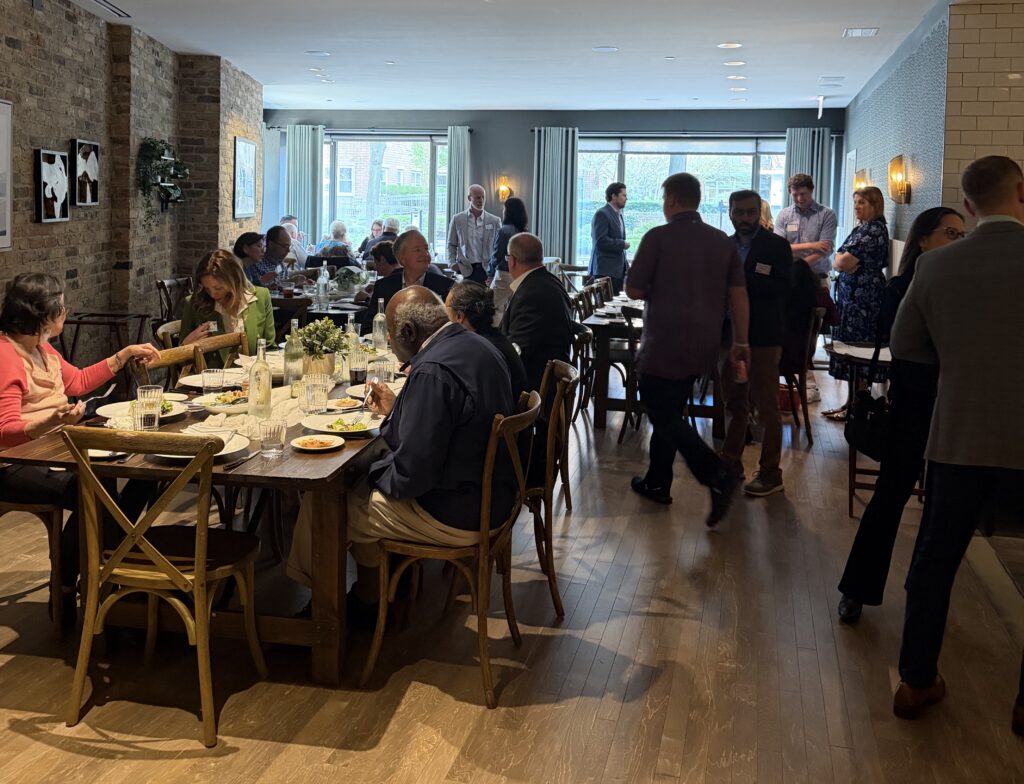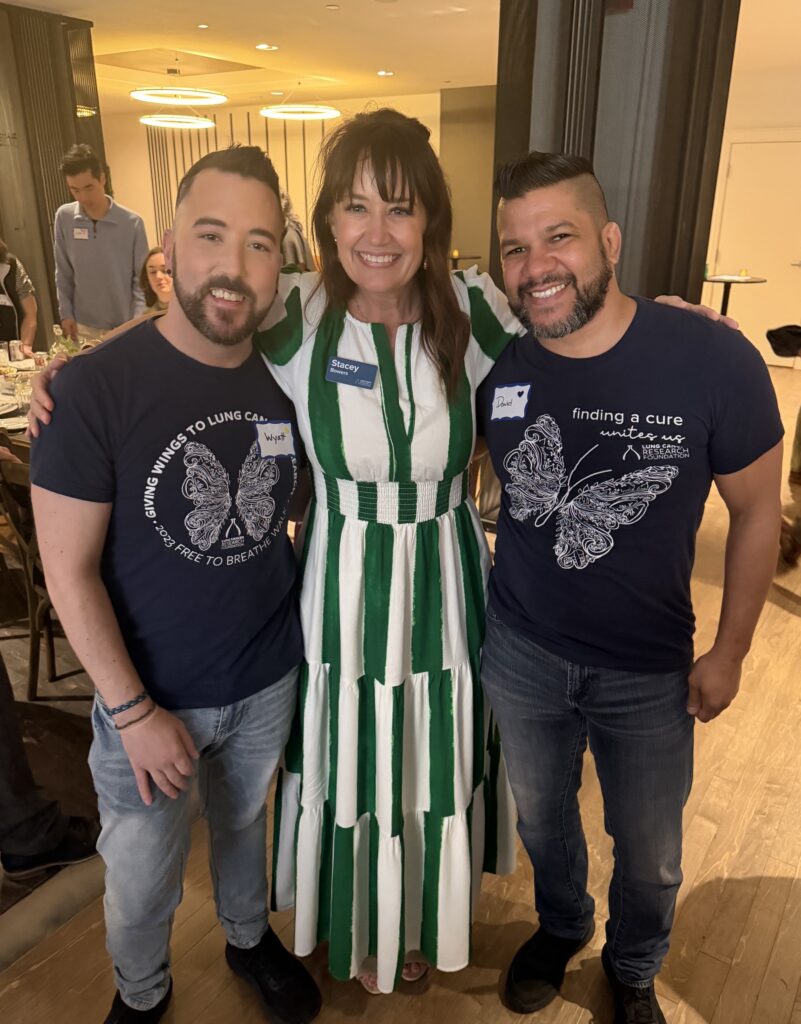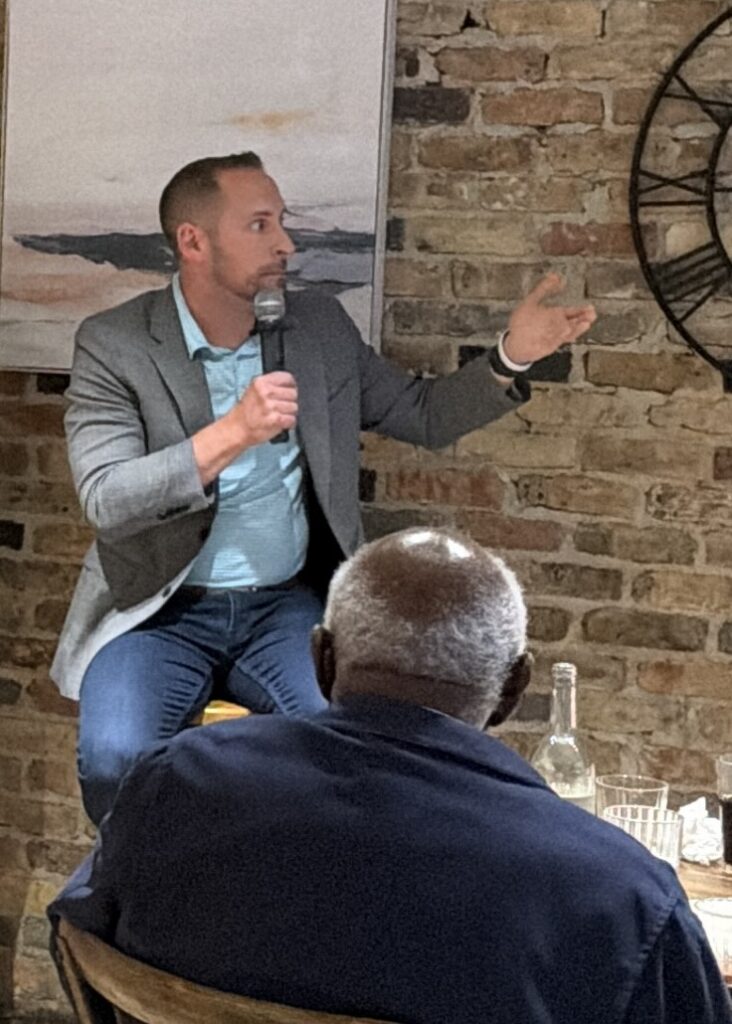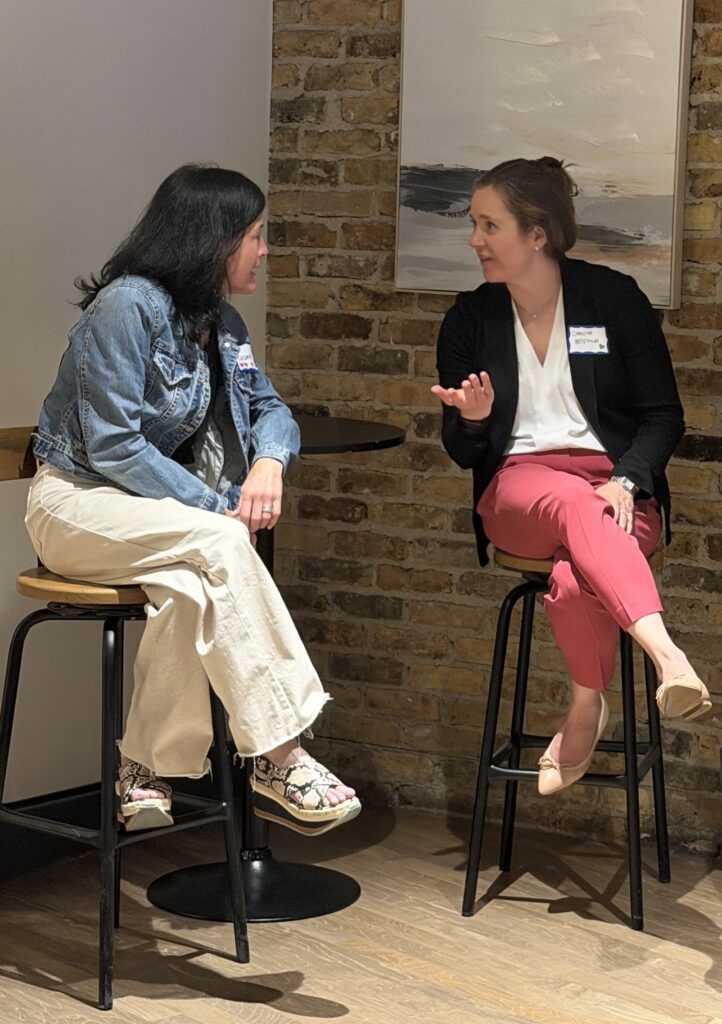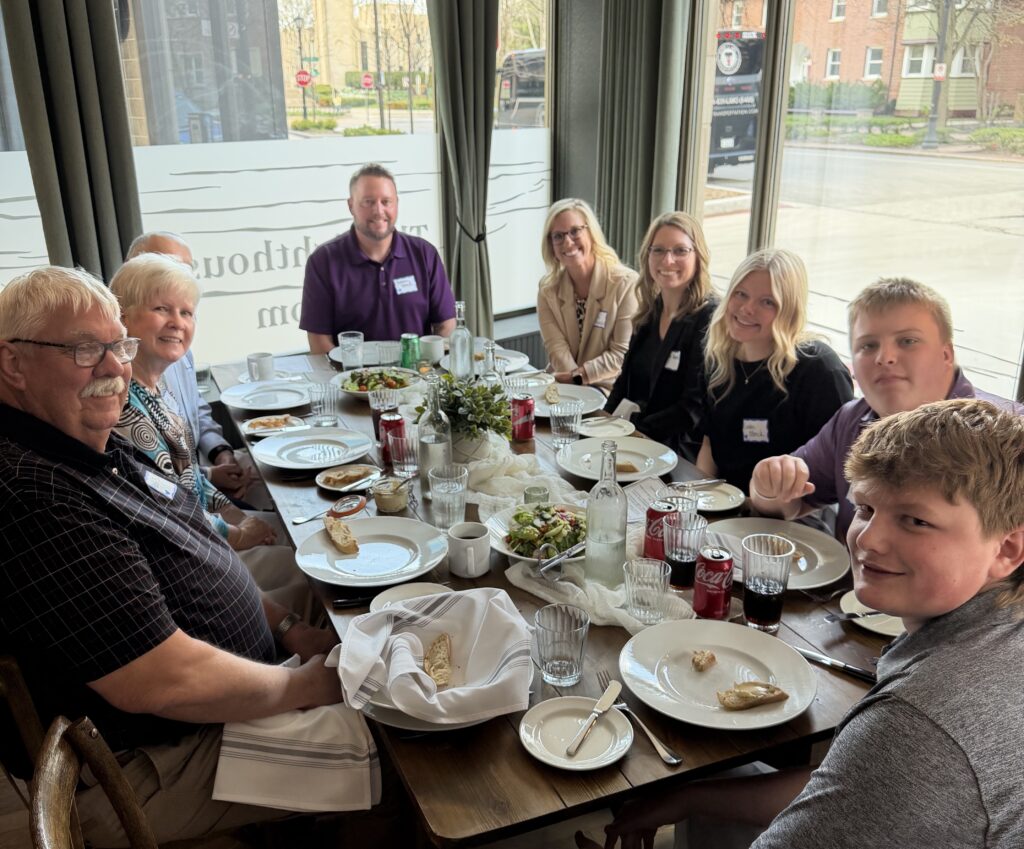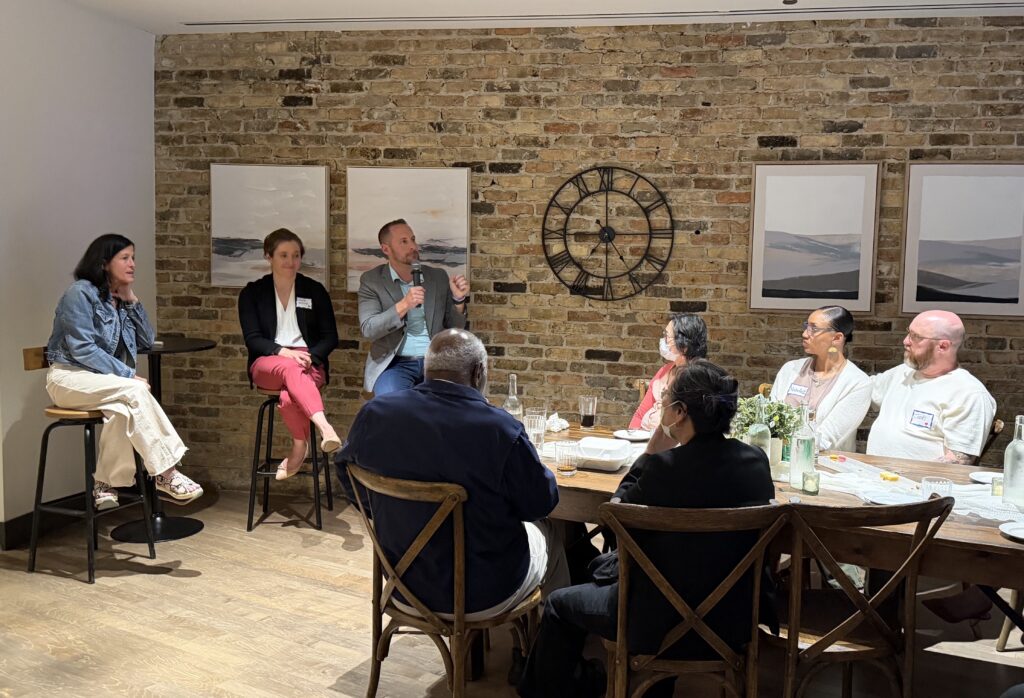
LCRF hosted its 5th annual Together Chicago dinner and discussion on April 14 in Evanston, IL. The event for patients, caregivers, and others who care about lung cancer drew a record-breaking number of registrants, with about 60 people in attendance.
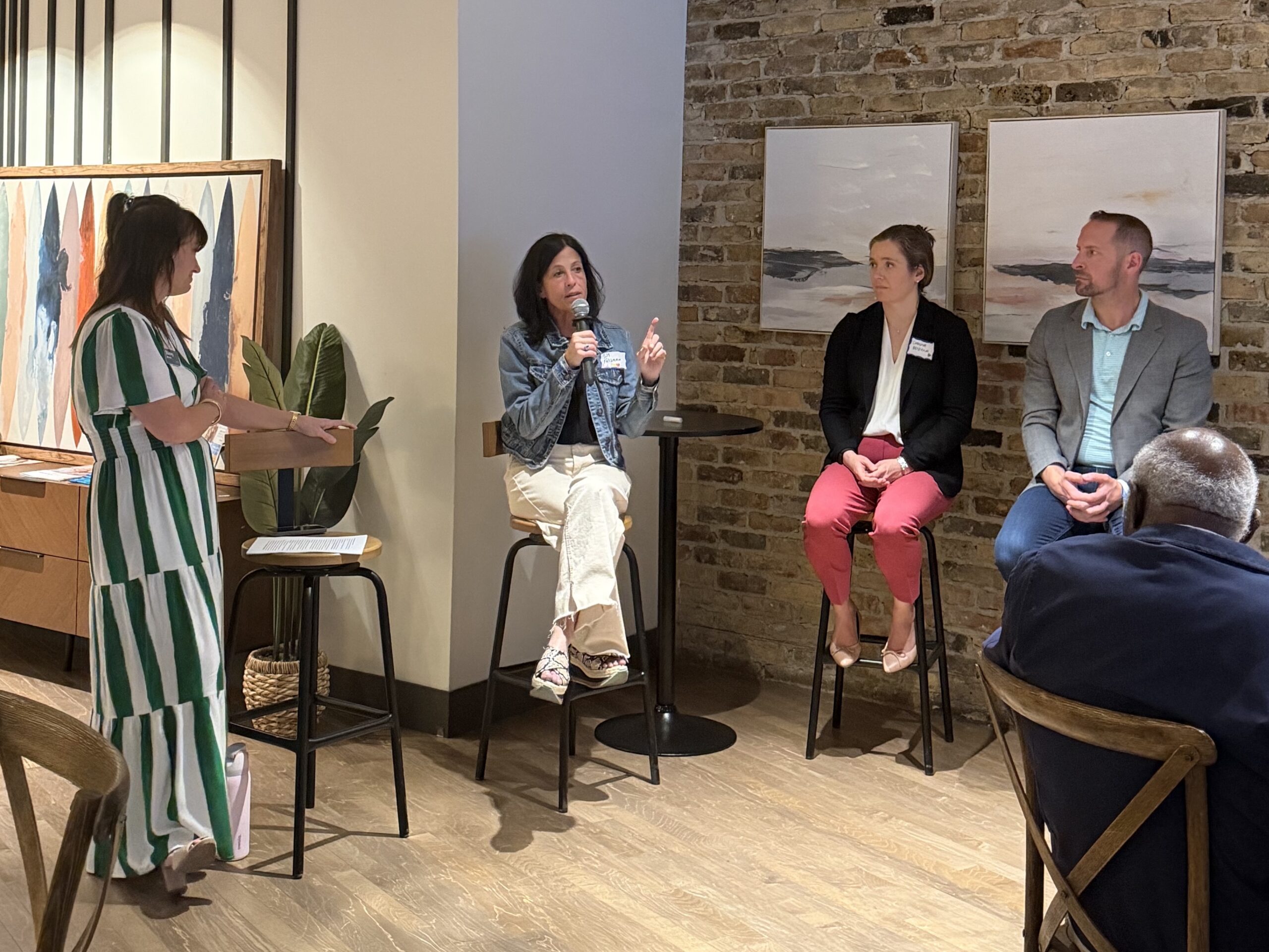
Dr. Christine Bestvina, UChicago Medicine, and Dr. Frank Weinberg, University of Illinois Cancer Center, offered their insights on the state of lung cancer research and treatment. Jill Feldman, co-founder of EGFR Resisters, rounded out the panel. Stacey Bowers, LCRF Vice President, Mission, was the moderator for the discussion.
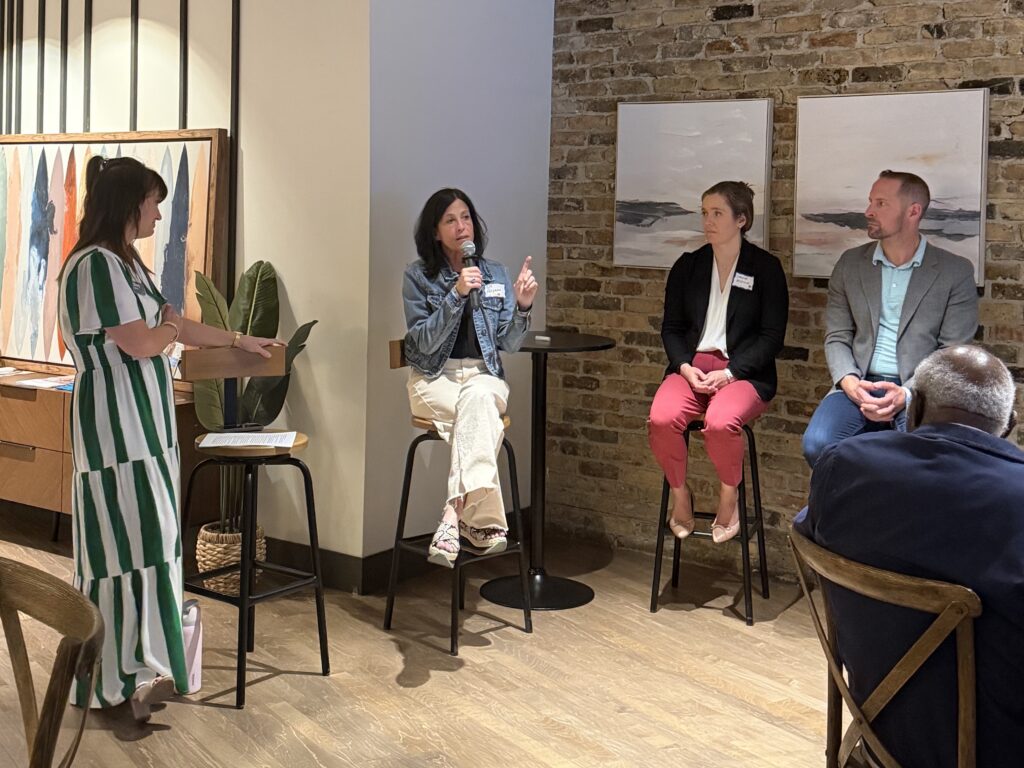
The group agreed there is much to be excited about in lung cancer treatment.
Dr. Bestvina spoke about developments in KRAS treatment. While first-generation KRAS G12C inhibitors are a good option, next-generation theoretical inhibitors are showing much better efficacy. “And very importantly, we can combine them with immunotherapy safely to try to move these drugs up into the front line. So I do think there’s going to be a huge revolution for KRAS in the next five years.”
Dr Weinberg noted it’s not just G12C, but other mutations. “We’re going to have to start understanding exactly what kind of mutation you have, because there are all these agents coming out. And that is exciting for these folks that traditionally haven’t had a lot of options.”
Small cell lung cancer
The panel also acknowledged the changing field of small cell lung cancer (SCLC) treatment. New medications are changing outcomes for patients with SCLC, earlier in treatment. Antibody drug conjugates are showing efficacy in studies.
“I think what we’re learning in small cell is that the immune system really is important for outcomes. And that’s exciting.”
Dr. Bestvina added that the way brain metastasis is treated is also changing. “I still occasionally see patients as second opinions who have been recommended for whole brain therapy for a single brain met, or even total brain radiation. We’re really moved away from that as the standard. If anybody has been recommended whole brain for their small cell, I absolutely would recommend a second opinion to make sure that’s appropriate for that clinical scenario.”
Recognizing caregivers
Dr. Weinberg mentioned that a former patient’s caregiver and friends were in attendance, and spoke about how much they had taught him.
“The caregiver is central to the entire treatment process for a patient. Because the caregiver is a person who is listening when the patient can’t listen…the caregiver is the person that’s there 24/7 when the physician, nurse, and medical team isn’t there.”
“That relationship is so important – we learn a lot, not only during the treatment but after. We learn how to be a better physician going forward. It’s so important to have those sort of relationships and really support the caregiver.”
Jill Feldman agreed. “I was a caregiver-slash-loved-one before I was a patient. And in many ways, it’s harder being that caregiver, because you are still paying bills, taking care of kids or elderly family, and you’re taking off work, and you’re worried about that patient, and you don’t really know how they’re feeling. It’s a lot. I do think it is important for the clinician to be involved.”
What research means
Each panelist spoke about the importance of research.
As a patient, Jill says, “my goal is to bring the lived experience into research and to make sure that it’s both meaningful and scientifically rigorous. Ultimately, I look at it as our most powerful tool. It’s our lifeline, our future, the future of our children and the next generation. And the true value of research for patients and families is hope – hope to live longer, and hope to live better.”
Dr. Bestvina pointed out that research is allowing patients access to drugs earlier on in their treatment. “Allowing improved efficacy of drugs as well as decreased toxicity for patients through clinical trials is the most important part of my research.”
Dr. Weinberg added, “Everything that we use is because of previous research. Look where we’ve come. The science embodies survivorship. It’s exciting.”
“What it means to me is hope. There’s hope. There’s hope for living longer. There’s hope for a cure.”