
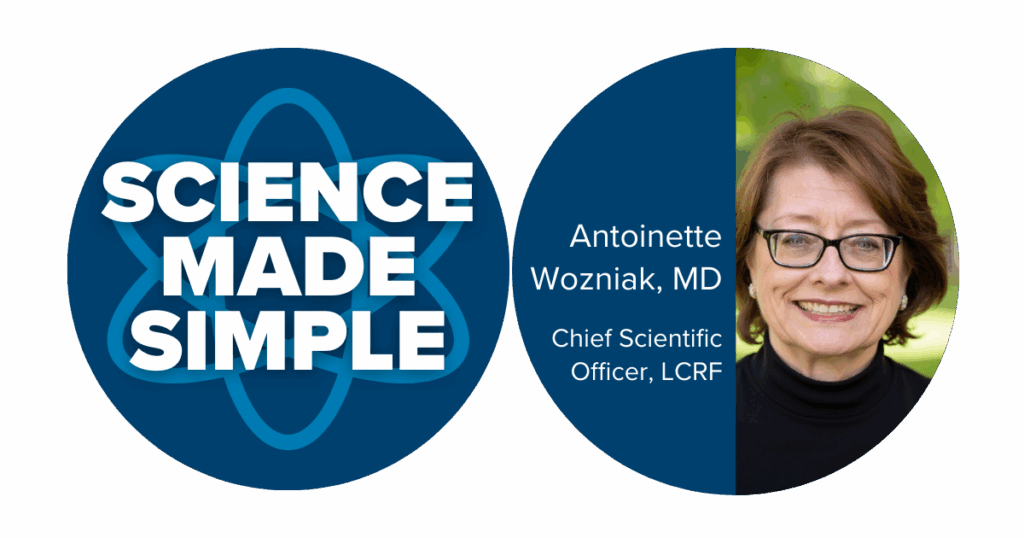
The good news
I have been a Medical Oncologist for over 40 years, and I have had the privilege of witnessing an explosion of advancements in the treatment of lung cancer. It has now been over 20 years since EGFR’s pivotal role in lung cancer was fully realized. Since then, there have been a tremendous number of Federal Drug Administration (FDA) approvals for novel agents in the management of lung cancer.
Why it’s important
In 2025, a number of novel agents were FDA approved for various forms of lung cancer.
- Two oral drugs, zongertinib and sevabertinib, for the treatment of non-small cell lung cancer (NSCLC) patients whose tumors have HER2 (ERBB2) mutations and who have received prior systemic therapy.
- In addition, sunvozertinib was approved for NSCLC with EGFR exon 20 mutations and larotrectinib for ROS1 and NTRK fusions.
- For the first time, two antibody-drug conjugates were approved for NSCLC treatment.
- Telisotuzumab, a c-Met-directed antibody drug conjugate (ADC), was approved for adults with NSCLC with high c-Met protein overexpression who have received prior therapy.
- Agents that already are FDA approved have found an indication in the treatment of lung cancer. An example is datopotamab deruxtecan, another ADC, that already is being used for the treatment of breast cancer and is now approved for patients with EGFR mutated NSCLC who have progressed on prior therapy.
What it means for patients
This ‘Science Made Simple’ does not include all the progress that has been made this past year, but these FDA approvals represent important advances in areas of unmet need, emphasizing the importance of molecular testing and the participation of patients in clinical trials. These advances would not be possible without the contribution of patients by their willingness to participate in clinical research.
What to look for
The 5-year survival rate for lung cancer has improved significantly, rising to 27% in 2025, compared to 17% in 2014. This result is attributed to advancements in treatment and early detection. 27% is clearly an improvement, but it is not good enough and more work needs to be done.
In the coming years, look for more drug approvals and efforts to detect lung cancer at an earlier stage, particularly in patients who do not meet the current screening criteria (i.e. never smokers).
Look for more advancements in the treatment of small cell lung cancer, which has been a particularly stubborn disease to treat but where there has been some recent progress.
LCRF continues to support researchers who are trying to understand the biology of lung cancer in order to develop novel therapies and overcome resistance to treatment.