
- Find out more about our partnerships with ALK Positive, EGFR Resisters, KRAS Kickers, and MET Crusaders.
- See the RFPs for the research we’re funding in 2022.
- Read about the recent FDA approval of nivolumab in combination with chemo for NSCLC and the study published by LCRF Vice Chair Dr. Brendon Stiles.
News
LCRF and KRAS Kickers celebrated their partnership between LCRF and KRAS Kickers with a special session hosted by Terri Conneran, founder of KRAS Kickers. Dr. Chiara Ambrogio was our guest speaker for the March 28 webinar, sharing updates about what’s happening in the KRAS research space along with details on her work in this area.
Watch the recording below.
Groups introduce 2022 grant mechanism for ALK-positive lung cancer
NEW YORK, NY (March 28, 2022) – The Lung Cancer Research Foundation (LCRF) and ALK Positive Inc. (ALK Positive) announce a research partnership to fund ALK-positive related lung cancer projects. Together, they pledge to fund three grants totaling $750,000 to advance high-impact research focused upon transforming care and improving outcomes for patients with ALK-positive non-small cell lung cancer (NSCLC).
Anaplastic lymphoma kinase (ALK) rearrangements, initially detected in NSCLC in 2007, occurs in approximately 5% of all lung cancer patients. However, it occurs in approximately 30% of lung cancer patients diagnosed under age 40, and there is no known correlation with smoking history nor any other health or environmental factors. About half of ALK-positive lung cancer patients are diagnosed before the age of 50 (compared to about age 70 for lung cancer overall), with many in their 30’s and 40’s, but some even in their teens and twenties.
The acceleration of precision medicine in NSCLC in the last decade, culminating in FDA approvals of targeted therapies for various molecular subsets of NSCLC, is in part due to advances in -omics and increased access to molecular profiling of tumors. The current FDA-approved treatment options for ALK-positive NSCLC include crizotinib, ceritinib, alectinib, brigatinib, and lorlatinib, with newer, next-generation therapies demonstrating superior efficacy against the disease. Although these ALK targeted therapies are associated with very durable responses, ALK-positive NSCLCs almost always develop resistance to currently available ALK inhibitors.
“ALK Positive is excited to partner with LCRF. Our partnership with LCRF leverages their rigorous selection process and access to experts to help us choose and support the research most likely to save the lives of patients and improve their quality of life,” notes Dr. Emily Venanzi, ALK-positive patient/survivor since 2017, and ALK Positive’s representative for this research partnership. “This $750,0000 research award program is our first research partnership with LCRF and will bring to almost $5,000,000 the total research grants our organization has helped fund and select. The members and supporters of ALK Positive and LCRF have made amazing efforts to raise funds for this award program. Currently, there is no known cure for this type of cancer in its advanced stage.”
“We are delighted to partner with ALK Positive on this funding mechanism,” remarked Dennis Chillemi, Executive Director of LCRF. “It is through partnerships like this one that research advancements are made. It is our hope that these awards accelerate ALK-positive therapeutics and uncover the next line of treatment options, so patients with this specific mutation have more options for positive outcomes.”
This funding mechanism will grant $250,000 over two years for selected projects and will be reviewed through a two-step process: first, submission of a Letter of Intent and, if selected, investigators will then be chosen to submit a full proposal. Both rounds of applications will be subject to a rigorous review by ALK Positive’s Research Review Panel and LCRF’s Scientific Advisory Board. More details about the Request for Proposal, along with eligibility, requirements, and deadlines are available at LCRF.org/FundingOpportunities.
###
About the Lung Cancer Research Foundation (LCRF)
The Lung Cancer Research Foundation® (LCRF) is the leading nonprofit organization focused on funding innovative, high-reward research with the potential to extend survival and improve quality of life for people with lung cancer. LCRF’s mission is to improve lung cancer outcomes by funding research for the prevention, diagnosis, treatment, and cure of lung cancer. To date, LCRF has funded 394 research grants, totaling nearly $39 million, the highest amount provided by a nonprofit organization dedicated to funding lung cancer research. For more information about the LCRF grant program and funding opportunities, visit LCRF.org/research.
About ALK Positive
ALK Positive is a 501(c)(3) organization with the mission to improve the life expectancy and quality of life of ALK-positive cancer patients worldwide. ALK Positive is committed to raising funds for research to fund research proposals that will transform ALK-positive cancer into a chronic or curable condition for all patients living with this disease. ALK Positive has raised over $6M to date to fund ALK-positive specific cancer research. ALK Positive is affiliated with the ALK Positive Support Group, the world’s largest community of ALK-positive patients. For more information about ALK Positive, please visit www.alkpositive.org.
Contact:
LUNG CANCER RESEARCH FOUNDATION
Sheila Sullivan
Senior Director, Marketing & Communications
ssullivan@LCRF.org
ALK POSITIVE
Emily Venanzi
ALK Positive Medical Committee
emily.venanzi@alkpositive.org
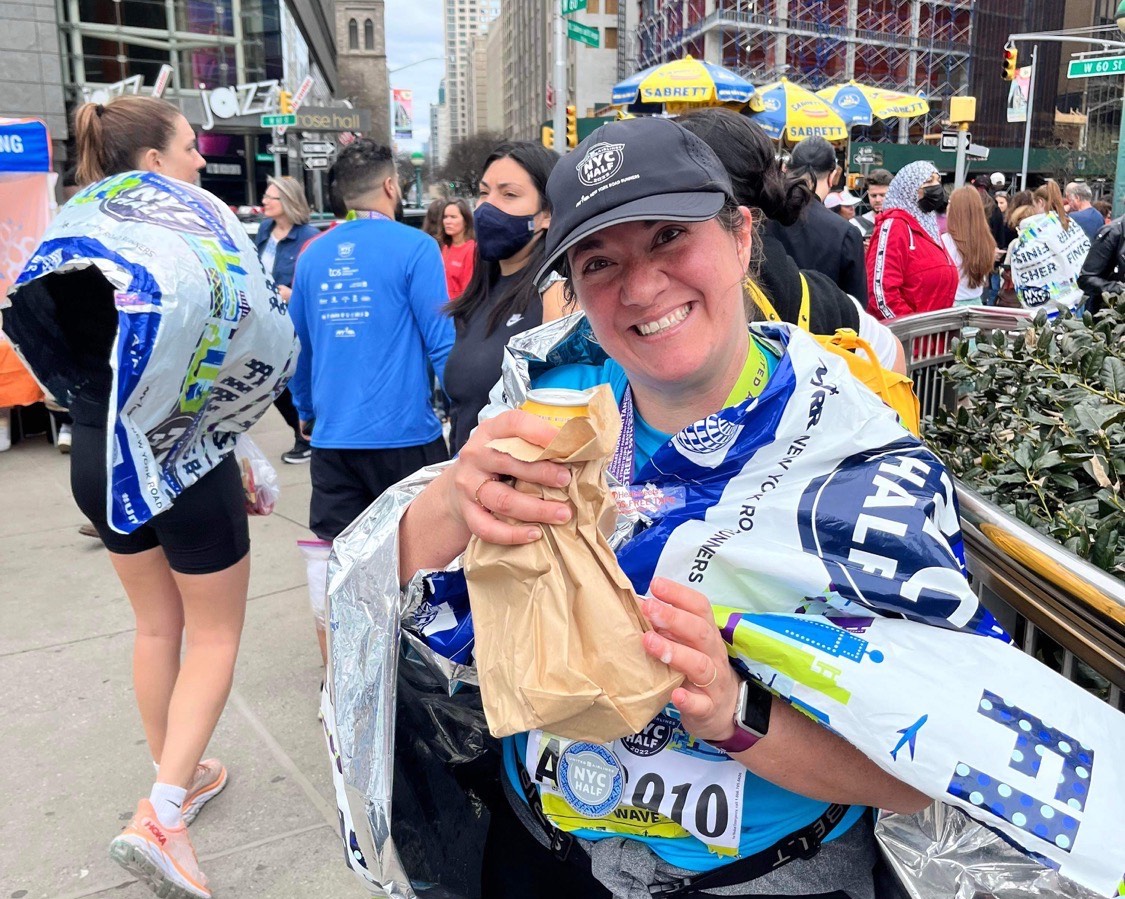
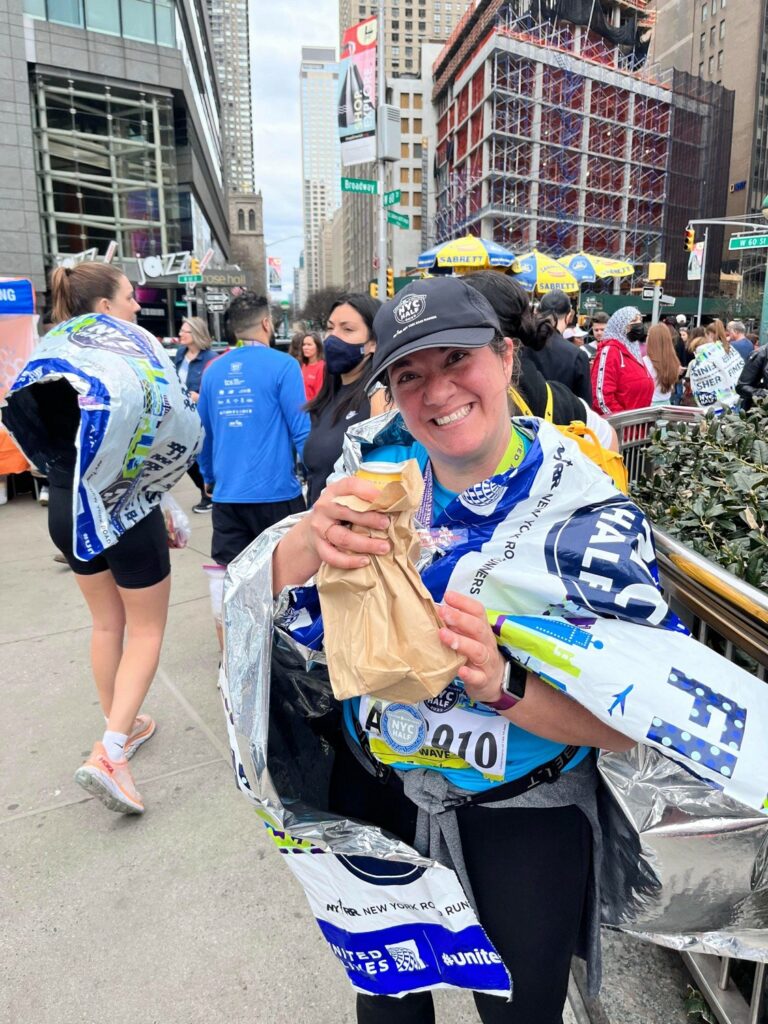
Team LCRF does it again! Six runners finished 13.1 miles on Sunday, March 20, raising $20,000 for lung cancer research in the process. Congratulations to Daphne Zoda, Julien Guy, Sara Schacter Erenburg, Lauren Walsh, Julia Grimm, and Isabella Theodorobeakos. Read more about them here.
Want to get involved with a future Team LCRF event? We’re looking for cyclists to join us for the Five Boro Bike Tour on May 1. Find out more. We’ll be announcing openings for the TCS NYC Marathon soon!




The news: Dr. Brendon Stiles and his colleagues may have identified a new mechanism of resistance to immunotherapy in NSCLC, called ART1.
Why it’s important: ART1 may play a large role in contributing to resistance to immunotherapy.

A study co-authored by Dr. Brendon Stiles, Vice Chair of the LCRF Board and its Scientific Advisory Board, with work funded by LCRF through one of its legacy organizations, was recently published in Science Translational Medicine. Dr. Stiles and his colleagues uncovered a possible reason why some lung cancer tumors become resistant to immune check point inhibitors and designed a solution that bolsters the body’s immune response in the lab.
Unfortunately, the tumors of many people with lung cancer who are being treated with immunotherapy either don’t respond or stop responding and start to grow, becoming “resistant” to immunotherapy. Dr. Stiles’ work in mice suggests that a molecule called ART1 may play a large role in contributing to this resistance. His lab also developed an antibody specific to ART, similar to the way specific antibodies target PDL1 made by tumor cells – which is how immunotherapy works.
Dr. Stiles and his colleagues concluded their findings by saying their data “provides preclinical evidence that antibody-mediated targeting of ART1 can improve tumor control, supporting pursuit of this approach in clinical studies.”

Dr. Stephen Liu and Dr. Isabel Preeshagul joined us for a #TogetherSeparately Lung Cancer Community livestream on March 23, 2022. Dr. Liu serves as Thoracic Medical Oncologist and Associate Professor of Medicine at Georgetown University, as well as Director of Thoracic Oncology and Head of Developmental Therapeutics for the Georgetown Lombardi Comprehensive Cancer Center. He provided an update on the latest news from IASLC’s recent Targeted Therapies of Lung Cancer meeting.
Watch the recording below.
Learn more about our webinar programs.

Lung cancer research grant mechanisms open for submission, with three new tracks
NEW YORK, NY (March 14, 2022) – The Lung Cancer Research Foundation (LCRF) announced today that its 2022 funding mechanisms are now open for submission.
In addition to its long-standing request for Pilot Grant proposals, LCRF has added three new grant tracks in 2022 aimed at furthering its commitment to funding investigators who are dedicated to finding solutions to the most pressing issues in lung cancer, including: early detection, gaining an understanding of and finding new approaches to treat specific molecular subsets of lung cancer and addressing inequities in the careers of investigators from underrepresented groups in cancer research.
“We are pleased to be announcing this year’s Requests for Proposals,” said Katerina Politi, PhD, Chair of LCRF’s Scientific Advisory Board, Cancer Biologist and Associate Professor at Yale’s School of Medicine. “LCRF’s unwavering commitment to funding projects that explore novel approaches to treatment, tackle disparities, increase the diversity of the lung cancer research workforce and support science that seeks solutions to lung cancer’s most vexing questions is reflected in the grant mechanisms this year. I look forward to the innovative proposals that will come to LCRF for review.”
The 2022 LCRF Research Grants on Oncogenic Drivers in Lung Cancer is a new funding mechanism to support projects that focus on characterizing, identifying, treating, overcoming, or preventing resistance to therapies in tumors harboring alterations in oncogenic drivers in non-small cell lung cancer cells, tissues, mouse models or patient tumors. These projects are led and funded in partnership with the patient advocacy groups EGFR Resisters, KRAS Kickers and MET Crusaders. This mechanism will address important issues faced by patients whose tumors have these specific oncogenic driver mutations, with the aim to increase survivorship.
LCRF’s Research Grant on Early Detection and Pre-Neoplasia in Lung Cancer is focused on identifying, characterizing, and developing approaches that will detect lung cancer at the earliest stages. Given the significance and need for early detection of lung cancer and advancements in screening, LCRF has launched this funding mechanism to support research projects that facilitate or advance the understanding and characterization of pre-neoplasia or approaches for early detection, in non-small cell and small cell lung cancer.
The newly launched LCRF Minority Career Development Award (CDA) for Lung Cancer is a two-year career development award intended to support early-stage scientists from underrepresented groups working in lung cancer and working in diverse areas of research including basic, clinical, translational, disparities, and social determinants of health research. The objective of this award is to increase the number of highly skilled and trained researchers from groups that are historically underrepresented in academia, medicine, and leadership in lung cancer research. This program aims to increase representation of investigators from underrepresented groups in lung cancer research.
Each of these funding mechanisms will award $150,000 over two years for selected projects, and all mechanisms except the LCRF Minority Career Development Award will be reviewed through a two-step process: Letters of Intent will be accepted until midnight on April 30, 2022; if selected, investigators will then be chosen to submit full proposals following a rigorous review. The LCRF Minority Career Development Award will require full proposal submission and that deadline is midnight, May 27, 2022. More details about each of the Requests for Proposal, along with eligibility, requirements, and deadlines can be found at LCRF.org/funding.
###
About the Lung Cancer Research Foundation (LCRF)
The Lung Cancer Research Foundation® (LCRF) is the leading nonprofit organization focused on funding innovative, high-reward research with the potential to extend survival and improve quality of life for people with lung cancer. LCRF’s mission is to improve lung cancer outcomes by funding research for the prevention, diagnosis, treatment, and cure of lung cancer. To date, LCRF has funded 394 research grants, totaling nearly $39 million, the highest amount provided by a nonprofit organization dedicated to funding lung cancer research. For more information about the LCRF grant program and funding opportunities, visit LCRF.org/research.
Contact:
LUNG CANCER RESEARCH FOUNDATION
Sheila Sullivan
Sr. Director, Marketing & Communications
ssullivan@lcrf.org

The U.S. Food and Drug Administration (FDA) approved nivolumab (Opdivo®) in combination with chemotherapy for adult patients with resectable non-small cell lung cancer (NSCLC) in the neoadjuvant setting.
This approval marks the first and only immunotherapy-based treatment for use before surgery for NSCLC.
In second year of partnership, groups introduce 2022 grant mechanism for EGFR positive lung cancer
NEW YORK, NY (March 10, 2022) – The Lung Cancer Research Foundation (LCRF) and the EGFR Resisters, in their second year of a research award partnership, announce their intent to fund at least two new grants specific to EGFR positive lung cancer in 2022.
In 2021, the EGFR Resisters funded one of LCRF’s Pilot Grants awarded to Yang Tian, PhD, from the Icahn School of Medicine at Mount Sinai, whose research project is titled “Targeting lung lineage plasticity to suppress Osimertinib-induced drug-tolerant persisters.” Although there has been an increase in progression-free survival in patients with EGFR-mutated lung cancer due to targeted therapy with EGFR TKIs (Tyrosine Kinase Inhibitors, commonly known as TKIs), the cancer eventually develops acquired resistance.
The EGFR Resisters and its members are responding to the urgent need for additional research to combat treatment resistance by partnering with LCRF on a new oncogenic-driver specific grant track in 2022.
“Patient led and funded research can uniquely address the specific unmet needs of patients,” says Jill Feldman, co-founder of the EGFR Resisters. “When patients are true partners in research, we can provide input that will drive research that is important and meaningful to our community.”
“Research has come so far since I was diagnosed in 2013, but we still need more options,” added Ivy Elkins, also a co-founder of the EGFR Resisters. “Through the strength of our motivated and active community of patients and caregivers, we have this opportunity to directly impact the research in EGFR positive lung cancer.”
For the new grants available, the members of the EGFR Resisters raised more than $200,000 for lung cancer research in 2021 and are targeting a total of $300,000 for 2022.
“The passion and commitment of patient groups to advance lung cancer research is unmatched,” remarked Dennis Chillemi, Executive Director of LCRF. “The EGFR Resisters are trailblazers in this respect and have led the way for other patient groups to speed the advancement of research that will directly impact the survival of patients with lung cancer. LCRF is honored to be a partner with the EGFR Resisters in achieving this goal.”
###
About the Lung Cancer Research Foundation (LCRF)
The Lung Cancer Research Foundation® (LCRF) is the leading nonprofit organization focused on funding innovative, high-reward research with the potential to extend survival and improve quality of life for people with lung cancer. LCRF’s mission is to improve lung cancer outcomes by funding research for the prevention, diagnosis, treatment, and cure of lung cancer. To date, LCRF has funded 394 research grants, totaling nearly $39 million, the highest amount provided by a nonprofit organization dedicated to funding lung cancer research. For more information about the LCRF grant program and funding opportunities, visit LCRF.org/research.
About the EGFR Resisters
Founded in 2017 by six patients and one caregiver, the EGFR Resisters is a grassroots, patient-driven community of patients and caregivers living with and/or personally affected by EGFR positive lung cancer. The group has a closed Facebook group for members to connect and share best practices, and it communicates with the broader EGFR community through a website, monthly newsletter, and social media. With close to 3,500 members in almost 90 countries, the EGFR Resisters aims to improve outcomes for all those with EGFR positive lung cancer by supporting patients and caregivers, increasing awareness and education for community members, improving access to effective diagnosis and treatment, and accelerating and funding research. The mission of the EGFR Resisters is to understand the unmet needs of the community and to use the strength of collaboration to drive important research questions and fund novel research and clinical trials. For more information about the EGFR Resisters, please visit egfrcancer.org.
Contact:
LUNG CANCER RESEARCH FOUNDATION
Sheila Sullivan
Sr. Director, Marketing & Communications
ssullivan@LCRF.org
EGFR Resisters
Laura Book
Media Contact
egfrresisters@gmail.com


Dr. Hilary Robbins, who received a 2020 LCRF Research Grant on Disparities, recently published a viewpoint piece in JAMA Oncology on equity in lung cancer screening eligibility.
Dr. Robbins writes that while the United States Preventive Services Taskforce’s updated recommendations will increase the low-dose CT screening of black patients, the disparity in life-years potentially gainable compared with white patients is still at least 15%. She discussed three possible models that could be used to create equity in lung cancer screening, while pointing out flaws in each approach. She believes that the scientific community must develop or find new solutions to achieving equity, and that other marginalized and excluded groups should be included.
Read her article here.