

From Misdiagnosis to Advocacy: Rosee’s Journey
June 2026
It all started with a vertigo attack.
In September 2022, Rosee woke in the middle of the night with severe and frightening symptoms: dizziness, a loss of balance, and a sense that everything was spinning around her. What followed was a two-year search for answers. Specialists attributed her symptoms to Ménière’s disease, a condition affecting balance and hearing, and she was told she would need to learn to live with it.
As the months passed, her symptoms worsened. She experienced hearing loss, persistent vertigo, debilitating migraines, and eventually numbness in her hand. In May 2024, after a fall and worsening neurological symptoms, an MRI revealed the true cause: multiple brain metastases. Additional scans identified the primary source of the cancer—lung cancer. Rosee was diagnosed with Stage 4 non-small cell lung cancer (NSCLC).
The diagnosis was shocking. Rosee had never smoked and had no family history of cancer. Yet she suddenly found herself facing advanced lung cancer and an uncertain future.
During an 18-day hospital stay, Rosee immersed herself in learning about lung cancer and the importance of biomarker testing. After seeking a second opinion, comprehensive genomic testing revealed an EGFR mutation, opening the door to targeted therapy. She began treatment with osimertinib (Tagrisso®), and within weeks experienced a dramatic response. Her tumors shrank significantly, her migraines and vertigo disappeared, and she began to regain her hearing.
Throughout her treatment, Rosee remains determined to fight—not only for herself, but for her family. She credits her husband, children, medical team, and fellow patient advocates with helping her find hope during the most difficult moments of her journey. She has also found strength in becoming an advocate herself, educating others, supporting fellow patients, and staying engaged with advances in lung cancer research.
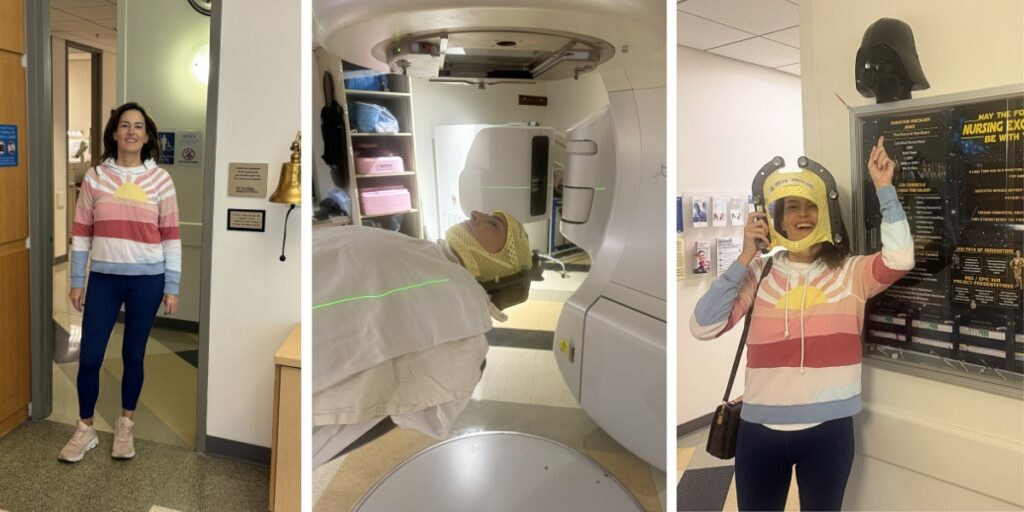
In an unexpected turn, lung cancer recently touched her family again. In 2026, Rosee’s husband was diagnosed with Stage 1 lung cancer. While undergoing testing related to life insurance, they discovered he had elevated carcinoembryonic antigen (CEA) levels which led to the discovery of his lung cancer before symptoms ever appeared. His cancer was found at an early stage, allowing for prompt treatment.
Experiences like these have strengthened Rosee’s belief that more research is urgently needed to improve how lung cancer is detected. Rosee has been reaching out to talk with researchers across the country and has been advocating through a change.org petition for early detection methods. Current screening guidelines primarily focus on individuals with a significant smoking history, leaving many people at risk without established pathways for early detection.
Rosee hopes that continued investment in research will lead to new tools and strategies that help identify lung cancer earlier, when treatment options are often more effective.
> Read about patients’ common symptoms
> Learn current screening guidelines
> News about screening and early detection
Today, Rosee remains committed to raising awareness for early detection methods, supporting research, and advocating for everyone affected by lung cancer. Through fundraising, patient advocacy, and sharing her story, she hopes to help create a future where more people receive an earlier diagnosis and have access to the treatments that can change—and save—lives.
“We need better ways to find this disease earlier and better treatments for those living with it,” Rosee said. “Research is how we get there.”
> Read about the latest science
> Get resources on living with lung cancer
> Donate to further lung cancer research