Enter your search term above.

News

By Karen V. | October 2021

It’s been just over 8 years since my life changed forever. Sharp pain in my back and shoulder prompted me to drive to the emergency room in the middle of a blizzard. My 12-year-old daughter came with me. I couldn’t figure out why the doctor kept asking me if I’d ever smoked (I haven’t).

Imagine my shock when I heard that I had a large tumor in my lung. I was 47 years old, had no family history, and I was a healthy person – I never, ever got sick. But the X-ray didn’t lie. I had surgery to remove my left upper lung and a bunch of lymph nodes, followed by chemotherapy.

I’ve had clear scans ever since…until this past February. Lower back pain sent me back to the doctor and the cancer was back. They took out a tumor and two of my ribs. With the help of my amazing doctors and my family, I am facing this latest challenge head-on.

Believe it or not, I have the same feeling about being diagnosed today with stage 4 lung cancer, as I did 8 years ago with stage 2. Because the amount of research that’s been done, I feel as confident now as I did then that I will see my way through this.

Eight years ago, they didn’t even know which mutation I had. Today, they do. I have one that affects only 3% of lung cancer patients, and there’s already two FDA-approved drugs for it.

I’m a big believer in not letting my cancer take over my life. I bike a hundred miles a week. I walk, I just started a French class, I’ve got a trip planned. None of this would be possible without the treatments I’ve had, and the treatments wouldn’t be possible without the research.

Everyone who hears a lung cancer diagnosis deserves to feel this hopeful!

Three functional subtypes of cancer-associated fibroblasts (CAF) can guide the designing of personalized treatment for lung cancer patients, according to a new LCRF-funded study published in Cancer Cell.

Solid tumors like non-small cell lung cancer (NSCLC) contain at least three major cellular components: cancer cells, immune cells, and CAFs. The current personalized cancer treatment paradigm predominantly focuses on targeting the cancer cells (e.g., oncogene-specific inhibitors) and the immune context (e.g., immune checkpoint blockade) of a tumor. And it remains unclear whether CAF can be leveraged for designing more personalized treatment.

Major Findings
  • Researchers identify that cancer-associated fibroblasts (CAFs) derived from non-small cell lung cancer (NSCLC) patients are functionally heterogeneous.
  • These functional distinctions directly impact response to clinical anticancer treatment and associate with the tumor immune microenvironment.
  • Thus, CAFs functional heterogeneity defines a unique parameter for designing more personalized treatments.
Haichuan Hu
Dr. Haichuan Hu

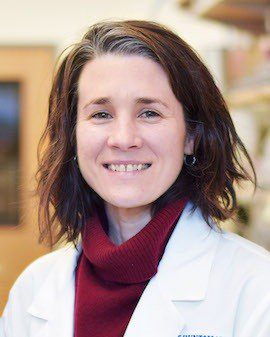
Unlike cancer cells that are readily distinguishable based on genomic aberrations, the characterization of CAFs heterogeneity has been historically challenging. As a result, previous attempts to universally target and broadly deplete CAFs rarely improved patient outcomes in the clinic. “We need a new approach to characterize the CAFs. Importantly, we need to gain a comprehensive understanding of different CAFs’ biological function and their clinical significance,” says lead author Haichuan Hu, MD, PhD, an Instructor in Medicine at MGH Cancer Center and Harvard Medical School.

In the Cancer Cell paper, the researchers take a unique approach to derive CAFs from lung cancer biopsies tissues. They compile a large collection of such patient-derived models that constitutes a living biobank of CAFs. Of note, this CAF biobank encompasses a broad molecular spectrum of CAFs in clinical NSCLC. Therefore, the researchers can test the CAFs in the lab and compare their therapeutic impacts with the corresponding patients’ treatment responses in the clinic. By functionally interrogating CAFs heterogeneity using the same therapeutics received by patients, they identify three functional subtypes: (1) those robustly protective of cancers and highly expressing HGF and FGF7, (2) those moderately protective of cancers and highly expressing FGF7, and (3) those providing minimal protection and recruiting immune cells. Therefore, patients carrying the first two subtypes of CAFs may benefit from enhanced combinatory therapies targeting MET (HGF receptor) and FGFR (FGF receptor), and patients carrying the third subtype of CAFs may benefit further from immuno-oncology strategies.

The MGH researchers further demonstrate that these functional subtypes of lung CAFs associate with patients’ clinical outcomes to targeted therapies, and CAFs’ functional distinctions are governed by their intrinsic TGF-beta signaling pathway activities.

For the first time, the researchers show the functional landscape of the broad spectrum of CAFs in lung cancer. And the vast distinctions in CAFs’ therapeutic and clinical impacts make it critical to refining the mainstream anticancer treatments based on this unique parameter. Biologists often refer to cancer as an echo system that every cell matters during clinical management, Dr. Hu further notes, “with many ongoing endeavors like this one, I am optimistic that one day that a fully personalized lung cancer treatment plan can be developed by taking into account the specific feature of each cell in a patient’s tumor.”

This work is supported by grants from the Lung Cancer Research Foundation, NIH, Wellcome Trust, MGH Cancer Center, LUNGevity, National Human Genome Research Institute, and Guangzhou Health Care Collaborative Innovation Major Projects.

Other key contributing authors on this work include Zofia Piotrowska, MD, MHS; Aaron N. Hata, MD, PhD; Lecia V. Sequist, MD, MPH; Cyril H. Benes, PhD, Matthew J. Niederst, PhD, and Jeffrey A. Engelman, MD, PhD.


Hu et al., Three subtypes of lung cancer fibroblasts define distinct therapeutic paradigms, Cancer Cell (2021)

The 2nd virtual Free to Breathe Walk took place on October 2, 2021 – our biggest virtual event ever! Despite not being able to gather in person, the walk truly brought the lung cancer community together in a heartwarming and inspirational way.

Philadelphia 6abc’s Nydia Han and radio personality Jaymie Bowles emceed a fun, informative rally, before participants went off to walk in their own neighborhoods. Guests included Dr. Ibiayi Dagogo-Jack from Massachusetts General Hospital and lung cancer survivor Anne Laporte. Watch the recording below or on Facebook Live.

Fourth study seeks 1,000 patients who are candidates for neoadjuvant therapy

NEW YORK, Sept. 28, 2021 /PRNewswire/ – The Lung Cancer Mutation Consortium (LCMC) kicks off its fourth study, facilitated by the Lung Cancer Research Foundation (LCRF), examining targeted drugs given as single agents and combinations as neoadjuvant therapies matched to specific genetic mutations. The screening trial, LCMC4 Evaluation of Actionable Drivers in EaRly Stage Lung Cancer (LEADER), is conducted through the LCMC and is a collaborative effort involving numerous academic study sites and pharmaceutical supporters.

Utilizing an umbrella trial design, the goal of the study is to screen for ten actionable driver mutations in 1,000 lung cancer patients who are candidates for neoadjuvant therapy (additional therapy before surgery.) The LEADER trial, together with matched industry-sponsored therapeutic trials, aims to develop data that will support oncologists in their targeted treatment planning for cancer patients prior to the patient undergoing surgical resection.

Katerina Politi, PhD, Associate Professor of Pathology and Internal Medicine, Yale School of Medicine, LCRF Scientific Advisory Board Chair

“Matching therapies to the oncogenic driver present in a lung tumor has improved outcomes for patients with advanced lung cancer. Understanding how this approach can be extended to patients with early-stage lung cancer has the potential to further transform how we treat this disease and have a positive impact on patients,” said Katerina Politi, PhD, Associate Professor of Pathology and Internal Medicine at Yale School of Medicine and chair of LCRF’s Scientific Advisory Board.

The LEADER trial will include participation from sites and investigators across the oncology community. In addition to Vanderbilt University, University of Texas MD Anderson Cancer Center and Memorial Sloan Kettering Cancer Center, other prospective participating sites include Dana Farber Cancer Institute, Yale University, Dartmouth-Hitchcock, Columbia University, NYU, Karmanos Cancer Center, University of Michigan, Case Comprehensive Cancer Center, Ohio State, Virginia Cancer Specialists, Sarah Cannon Cancer Center, Moffitt Cancer Center, University of Miami, University of Missouri, Washington University, University of Colorado, Cedars-Sinai, St. Joseph Hospital Center for Cancer Prevention and Treatment, City of Hope Cancer Center, UCLA, USC Norris Cancer Center, University of California-Davis, and University of Washington.

Early-stage lung cancer patients who are interested in participating in the LCMC LEADER trial should discuss the study with their oncologist to determine eligibility.

To learn more about LCRF and its grants program, visit LCRF.org/research.

To learn more about LCMC and the LEADER trial, visit LCRF.org/LCMC4.

A growing number of cancer patients are being spared chemotherapy – and its dreaded side effects – in favor of other options. A recent article in the New York Times investigated this development, featuring comments by patients and physicians including Dr. Roy Herbst, a Yale oncologist and member of LCRF’s Scientific Advisory Board.

Dr. Roy Herbst
Dr. Roy Herbst

When Dr. Roy Herbst of Yale started in oncology about 25 years ago, nearly every lung cancer patient with advanced disease got chemotherapy. With chemotherapy, he said, “patients would be sure to have one thing: side effects.” Yet despite treatment, most tumors continued to grow and spread. Less than half his patients would be alive a year later. The five-year survival rate was just 5 to 10 percent.

Those dismal statistics barely budged until 2010, when targeted therapies began to emerge. There are now nine such drugs for lung cancer patients, three of which were approved since May of this year. About a quarter of lung cancer patients can be treated with these drugs alone, and more than half who began treatment with a targeted drug five years ago are still alive. The five-year survival rate for patients with advanced lung cancer is now approaching 30 percent.

New York Times, “Cancer Without Chemotherapy: ‘A Totally Different World’”

Read the full article here.

Dr. Roy Herbst
Dr. Roy Herbst

New findings from the COAST trial led by researchers at Yale Cancer Center show that adding oleclumab or monalizumab to durvalumab improved progression-free survival for patients with locally advanced non-small cell lung cancer (NSCLC). The findings were presented this month at the annual meeting of the European Society for Medical Oncology (ESMO).

Roy S. Herbst, MD, PhD, Chief of Medical Oncology at Yale Cancer Center and a member of LCRF’s Scientific Advisory Board, is lead author of the study.

Read more

Trudy Oliver
Dr. Trudy Oliver

LCRF Scientific Advisory Board member Trudy G. Oliver, PhD, received the Heine H. Hansen Lectureship Award for Small Cell Lung Cancer during the International Association for the Study of Lung Cancer’s (IASLC) 2021 World Conference on Lung Cancer last week. The lectureship award recognize clinicians and researchers who made significant contributions to the fight against lung cancer and represent many major categories of lung cancer research, from tumor staging to tobacco control and smoking cessation.

Dr. Oliver was recognized for her work in pharmacology and cancer research. She is an associate professor in the Department of Oncological Sciences at the University of Utah and a Huntsman Cancer Institute (HCI) Endowed Chair in Cancer Research. She currently co-leads the Cell Response and Regulation (CRR) program and the Lung Cancer Center at HCI.

She has received many awards, including the LCRF’s William C. Rippe Award for Distinguished Research in Lung Cancer.

Dr. Oliver’s research is devoted to understanding mechanisms of lung cancer biology with the goal of identifying noval therapeutic targets to improve patient outcomes. Her laboratory has developed multiple, novel mouse models of squamous and small cell lung cancer (SCLC). Using these systems, her lab discovered that the MYC oncogene drives unique molecular subtypes of SCLC, and that SCLC subtypes demonstrate plasticity in mouse and human tumors. Her work has identified multiple therapeutic vulnerabilities for molecular subsets of SCLC, including the observation that SCLC subtypes are metabolocally distinct with MYC-high SCLC uniquely dependent on arginine.

Dr. David Carbone

LCRF Scientific Advisory Board member David Carbone, MD, PhD, is the 2021 recipient of the Paul A. Bunn, Jr. Scientific Award. The award was presented at the International Association for the Study of Lung Cancer’s (IASLC) 2021 World Conference on Lung Cancer last week.

Dr. Carbone is professor of Internal Medicine and director of the James Thoracic Oncology Center at The Ohio State University Comprehensive Cancer Center and Solove Research Institute & Professor of Medicine, The Ohio State University. He holds the Barbara J. Bonner Chair in Lung Research. 

His recent research directions include development of molecular biomarkers to guide patient treatment, and molecular profiling of lung cancers and preneoplasias to guide the development of novel therapeutics, especially using mass spectrometry-based proteomics. He has more than 200 peer-reviewed publications, books, and review articles, has served on several NCI grant review panels (including the clinical program project parent committee), and has had continuous funding from the National Cancer Institute (NCI) since early in his career. He served on the Board of Scientific Counselors for the NCI, and currently is Chair of the Lung Biology subcommittee for the Eastern Cooperative Oncology Group and Past President of the IASLC.

The Paul A. Bunn, Jr. Scientific Award recognizes an IASLC scientist for a lifetime achievement of scientific contributions to thoracic cancer research. Dr. Paul Bunn’s studies set worldwide standards for the treatment of lung cancer and identified issues of natural history and biomarkers of prognosis and therapy selection. Initially named the Scientific Award, the IASLC renamed the award in honor of Dr. Bunn after he served as the society’s executive director and CEO for 10 years.

The FDA has approved mobocertinib for the treatment of adult patients with locally advanced or metastatic non–small cell lung cancer with EGFR exon 20 insertion mutations whose disease has progressed on or after platinum-based chemotherapy. Mobocertinib is the first and only oral therapy specifically designed to target EGFR exon 20 insertions.

Read more


FDA approves first targeted therapy for KRAS+ NSCLC

Posted June 1, 2021

The FDA approved Lumakras™ (sotorasib) as the first treatment for non-small cell lung cancer (NSCLC) patients whose tumors have the KRAS G12C genetic mutation and who have received at least one prior systemic therapy. This is the first approved targeted therapy for tumors with any KRAS mutation, which accounts for approximately 25% of mutations in NSCLC.

Read more


Rybrevant approved for NSCLC with EGFR Exon 20 insertion mutations

Posted May 27, 2021

The FDA has approved Rybrevant (amivantamab-vmjw) for adults with non-small cell lung cancer (NSCLC) with epidermal growth factor receptor (EGFR) exon 20 insertion mutations.

The Guardant360 CDx (Guardant Health Inc.) liquid biopsy test was also approved as a companion diagnostic for use with Rybrevant.

“For the first time, patients with non-small cell lung cancer with EGFR exon 20 insertion mutations will have a targeted treatment option,” said Julia Beaver, M.D., chief of medical oncology in the FDA’s Oncology Center of Excellence and acting deputy director of the Office of Oncologic Diseases in the FDA’s Center for Drug Evaluation and Research.

Read more


FDA grants fast track status for targeted treatment poziotinib

Posted March 15, 2021

The FDA has granted fast track status for the targeted treatment poziotinib, which is used to treat patients with non-small cell lung cancer (NSCLC) HER2 exon 20 mutations.  Fast track is a process intended to accelerate the review of drugs to treat serious conditions and fill an unmet medical need. This new status for poziotinib is welcome news as no FDA approved targeted treatments currently exist for those with the specific HER2 exon 20 mutation.

Read more


Research shows brigatinib provides improved health outcomes

Posted March 9, 2021

Almost a year ago, the FDA approved brigatinib (Alunbrig®) for the first-line of treatment of patients with ALK+ metastatic non-small cell lung cancer (NSCLC). Since then, research has continued to provide evidence that brigatinib has consistent superiority in progression-free survival (PFS) compared to the targeted treatment crizotinib (Xalkori®).

Read more


Lorlatinib approved as targeted therapy for NSCLC

Posted March 8, 2021

Lorlatinib (Lorbrena®) is a targeted treatment that can now be used for metastatic NSCLC patients with ALK-positive tumors in the first-line setting. Prior to this approval, lorlatinib was only approved for use in the second- or third-line setting. The FDA also approved the treatment Ventana ALK (D5F3) CDx Assay as a companion treatment for those using lorlatinib.

Read more


Two promising KRAS inhibitors soon to be FDA approved

Posted February 26, 2021

The KRAS G12C mutation leads to a specific type of lung cancer, in individuals who are likely to have been smokers and likely to respond to immunotherapy. Currently, we have several KRASG12C inhibitors that are under clinical development and may reveal an effective targeted treatments for KRAS G12C patients. Sotorasib (AMG 510) and adagrasib (MRTX849) have shown be to effective and researchers believe that these two treatments are very likely to be approved by the FDA within a year as a second-line treatment. This is positive news that will benefit many KRAS patients through their treatment journey.

Read more


FDA approves immunotherapy for NSCLC patients

Posted February 22, 2021

Yet another immunotherapy is now approved for non- small cell lung cancer (NSCLC) patients! Libtayo® (also known as cemiplimab-rwlc) is an immunotherapy drug that can be used in the first-line setting for NSCLC patients who are not otherwise eligible for surgery or chemoradiation treatment for their diagnosis. NSCLC patients must exhibit high PD-L1 expression with no presence of the EGFR, ALK, or ROS1 aberrations, to be eligible for this new treatment approval.

Read more


FDA approves Cosela to reduce bone marrow suppression in SCLC patients

Posted February 16, 2021

The FDA has granted approval to the first-in-class agent trilaciclib (Cosela™) for the treatment of patients with extensive-stage small cell lung cancer (SCLC) to reduce chemotherapy-induced bone marrow suppression.

“For patients with extensive-stage small cell lung cancer, protecting bone marrow function may help make their chemotherapy safer and allow them to complete their course of treatment on time and according to plan,” said Albert Deisseroth, MD, PhD, supervisory medical officer in the Division of Non-Malignant Hematology in the FDA’s Center for Drug Evaluation and Research. The approval “will give patients a treatment option that can reduce the occurrence of a common, harmful side effect of chemotherapy.”

Read more


FDA approves Tepmetko for MET exon 14 NSCLC patients

Posted February 4, 2021

On February 3, 2021, the Food and Drug Administration (FDA) granted accelerated approval for tepotinib (Tepmetko®) for the treatment of metastatic non-small cell lung cancer (NSCLC) patients who have the MET exon 14 skipping alterations. This is the second targeted treatment now available for this specific patient group. The FDA approval was based off the VISION trial showing overall response rate was sustained for a median of 10-11 months.

Read more


Trial fails to show benefit to combining EGFR tyrosine kinase inhibitor and anti-VEGF agent

Posted February 3, 2021

In a new clinical trial performed by JAMA Oncology, osimertinib (Tagrisso®) plus bevacizumab (Avastin®) failed to demonstrate prolongation of progression-free survival (PFS) compared with osimertinib alone in patients with non-small cell lung cancer (NSCLC). Several other studies are still ongoing and will be looked upon with interest. Additionally, a phase 3 trial of osimertinib with or without bevacizumab is being conducted and can deliver more insight about this treatment.

Read more


FDA grants priority review for lorlatinab as first line treatment for ALK+ NSCLC

Posted February 2, 2021

The FDA has granted a priority review of the supplemental new drug application for the third-generation ALK inhibitor lorlatinib (Lorbrena®) as a first-line treatment for patients with ALK-positive metastatic non–small cell lung cancer (NSCLC). This advancement can speed up availability of the potentially life-changing medicine lorlatinib. The goal date for the completion of the review has been set by the FDA for April 2021.

Read more


FDA grants breakthrough therapy designation to new immunotherapy drug

Posted January 11, 2021

The FDA has granted a breakthrough therapy designation to a promising new immunotherapy drug called tiragolumab that can be used in combination with atezolizumab (Tecentriq®) as a first-line therapy for metastatic non-small cell lung cancer (NSCLC) patients with high PD-L1 expression. NSCLC patients must not have the EGFR or ALK genomic tumor irregularities present.

This breakthrough therapy designation will accelerate the progress of the CITYSCAPE clinical trial to focus event more on the benefits of tiragolumab as a possible chemotherapy-free combination treatment in earlier stages of cancer.

Read more


FDA approves Tagrisso as first adjuvant therapy for earlier stage NSCLC with certain EGFR mutations

Posted January 4, 2021

On December 18, 2020 the FDA approved osimertinib (Tagrisso®) as the first adjuvant therapy that can be used in NSCLC Stage IB-IIIA patients positive for either EGFR exon 19 or exon 21 L858R genetic mutations. Patients must first have undergone resection, or in other words had their tumor removed with surgery, before receiving Tagrisso.

The most exciting part about this approval is that Tagrisso can now be used to treat NSCLC patients in earlier stages as well as late stage. This provides the potential for an earlier and hopefully more curative therapy, which is great news for the nearly 20% of all lung cancer patients who have the EGFR mutation.

Read more


FDA grants sotorasib breakthrough therapy designation

Posted December 9, 2020

As of December 8, 2020, the FDA has granted a breakthrough therapy designation for a drug called sotorasib for the treatment of patients living with non-small cell lung cancer (NSCLC) containing the KRAS G12C mutation. This treatment may be used on NSCLC patients after they are confirmed to have the KRAS G12C mutation through the use of an FDA-approved diagnostic test and following at least one other systemic therapy.

The KRAS genetic mutation is the most commonly occurring mutation in adenocarcinoma NSCLC. Furthermore, the KRAS G12C mutation affects roughly 13% of all adenocarcinoma NSCLC patients. In the United States alone, 25,000 NSCLC patients will be diagnosed with this specific mutation every year.

This breakthrough therapy designation for sotorasib brings the lung cancer community closer to finding the very first targeted therapy that can be used to treat this commonly occurring genetic mutation.

Read more


FDA approves cobas EGFR mutation test v2

Posted November 5, 2020

The Food and Drug Administration approved “cobas EGFR mutation test v2” to identify NSCLC patients eligible for any of the EGFR inhibitor therapies, including those used to treat EGFR exon 19 and L858R deletions, as well as any EGFR therapies to come in the future. 

Read more here.


FDA grants priority review to Libtayo®

Posted November 2, 2020

The Food and Drug Administration granted priority review to cemiplimab-rwlc (Libtayo®) for treatment of certain patients with non-small cell lung cancer.

The designation applies to use as first-line therapy for locally advanced or metastatic NSCLC with 50% or greater PD-L1 expression.

Read more here.


FDA approves diagnostic test for NTRK+

Posted October 27, 2020

On October 23, the Food and Drug Administration approved the next-generation sequencing (NGS)-based FoundationOne CDx test as a companion diagnostic to help identify NTRK+ solid tumor patients eligible for larotrectinib.

Read more here.


FDA grants expedited review for Tagrisso® in early-stage lung cancer

Posted October 21, 2020

The Food and Drug Administration has granted its Priority Review designation for AstraZeneca’s Tagrisso® in certain patients with early-stage lung cancer.

These faster reviews, which take six months instead of the standard 10-month timeframe, are reserved for medicines that demonstrate significant improvements in efficacy or safety for serious diseases.

Read more here.


FDA approves drug for patients with NSCLC RET mutation

Posted September 8, 2020

On September 4, the Food and Drug Administration granted accelerated approval of Gavreto™ (pralsetinib) for people with metastatic non-small-cell lung cancer (NSCLC) with the RET mutation.

Gavreto™ inhibits a receptor tyrosine kinase known as RET, which plays a role in cell proliferation. RET gene mutations or fusions can drive cancer growth, and about 1-2% of NSCLC patients are thought to be affected.

This is the second drug approved for patients whose cancers harbor RET mutations. This approval provides oncologists and patients with an additional option for treatment.

Read more here.


FDA grants priority review to tepotinib for NSCLC patients with MET

Posted August 27, 2020

The Food and Drug Administration has given priority review to tepotinib, a soon-to-be targeted therapy for NSCLC patients with the MET exon 14 mutation.

This new drug will be in addition to Tabrecta™, which was previously approved for MET exon 14.

Read more here.


FDA approves first liquid biopsy with NGS technology for EGFR

Posted August 7, 2020

On August 7, the U.S. Food and Drug Administration approved the Guardant360 CDx assay liquid – or blood – biopsy. This biomarker test uses next-generation sequencing (NGS) technology to identify patients with the epidermal growth factor receptor (EGFR) gene in a deadly form of metastatic non-small cell lung cancer (NSCLC). This is the first approval to combine two technologies — NGS and liquid biopsy — in one diagnostic test in order to guide treatment decisions.

Typically, biomarker testing involves a tissue sample from the primary tumor. This biomarker testing will use blood instead, while still utilizing the NGS biomarker testing normally done on tissue samples. 

Read more here.