The US Food and Drug Administration (FDA) approved Median Technologies’ eyonisTM Lung Cancer Screening (LCS), a medical device used for the combined detection and diagnosis of lung cancer.
Why it’s important
EyonisTM LCS is an AI-based technology designed to support the earlier detection of lung cancer by helping clinicians identify and characterize pulmonary (lung) nodules on low-dose CT scans. The RELIVE study involved 480 high-risk patients and showed that this technology improved radiologists’ ability to detect and evaluate lung nodules. A previous trial, the REALITY study, demonstrated eyonisTM LCS’s ability to accurately tell the difference between cancerous and non-cancerous lung nodules. These studies were conducted using existing patient information from major cancer centers in the US and Europe. This is important because applying this technology to low-dose CT screening has the potential to improve the early detection of lung cancer.
What it means for patients
The ability to improve the detection of lung cancer at an earlier stage through LCS can only result in an increase in survival. The ability to accurately determine whether a lung nodule is cancerous can reduce the need for additional testing and other procedures such as biopsies. This technology has the potential to be used worldwide and could result in reduced health care costs. It is important to remember the use of AI in screening does not eliminate the need for the “human” factor but aids radiologists in making earlier and more accurate diagnoses.
What to look for
This development is just the beginning of an AI revolution in healthcare. Expect to see more use of AI in radiology, pathology and other aspects of healthcare management.
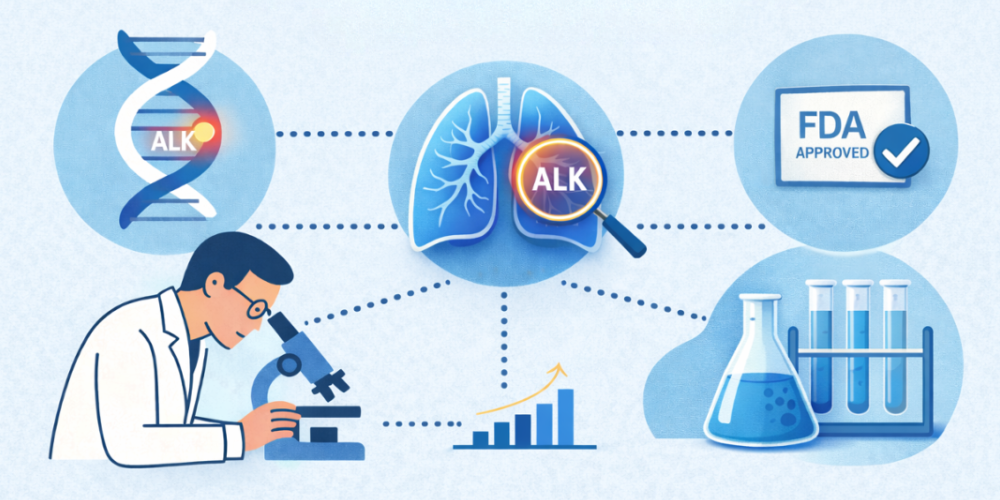
From Discovery to Durability: The ALK Lung Cancer Breakthrough—and the Research That Made It Possible
By Dhru Deb, PhD Senior Director, Research and Administration, LCRF
In 2007, researchers identified a new genetic driver in a small but significant subset of non–small cell lung cancer (NSCLC): a change in the structure of a chromosome that accidentally joins two genes—EML4 and ALK—together, creating what is known as the EML4-ALK fusion. For patients—often younger, never- or light-smokers—this discovery offered something rare in lung cancer at the time: a clear molecular target.
The first drug to successfully target ALK-rearranged lung cancer was crizotinib. Initially developed for a different target, it produced dramatic tumor shrinkage in patients whose cancers harbored ALK fusions. Clinical trials including PROFILE 1007 and PROFILE 1014 demonstrated superior response rates and longer progression-free survival compared with chemotherapy. In 2011, crizotinib received FDA approval.
For patients, this was transformative. Tumors that had been growing rapidly began shrinking within weeks. Symptoms improved.
But as with nearly all targeted therapies, the benefit did not last forever. Within one to two years for most patients, the cancer returned. Some tumors acquired new mutations in the ALK gene itself. Others activated alternative signaling pathways. Many spread to the brain, where crizotinib had limited penetration.
Understanding why resistance happened—and how to overcome it—became the next urgent frontier. This is where Lung Cancer Research Foundation (LCRF) mediated visionary donors’ intentions to support research that made a crucial difference.
In 2009, Dr. Susumu Kobayashi at Beth Israel Deaconess Medical Center launched LCRF-funded research to identify mechanisms of resistance to ALK inhibitors. His work helped define secondary ALK mutations as actionable drivers of relapse, creating a roadmap for designing next-generation inhibitors that could overcome them.
In 2010, Dr. Christine Lovly at Vanderbilt University Medical Center focused her LCRF-supported research on developing novel therapeutic strategies for ALK-fusion–positive lung cancer. Her work contributed to understanding how resistance pathways emerge and how they might be targeted.
In 2011, Dr. Magda Stumpfova at the Dana-Farber Cancer Institute identified CRKL as a new way cancer cells can become resistant to treatment. Her research showed that resistance doesn’t always happen because the original target of the drug changes. Instead, cancer cells can sometimes switch on alternative signaling routes inside the cell—essentially finding a workaround—that allow them to keep growing even when ALK is being blocked.
In 2012, Dr. Adam Crystal at Massachusetts General Hospital tested combination drug approaches in models of crizotinib-resistant disease, helping validate the concept that dual targeting strategies might delay or overcome resistance.
These projects were launched at a time when resistance biology was only beginning to be mapped. Their findings informed both laboratory science and clinical strategy.
Armed with deeper knowledge of resistance mutations and the need for brain-penetrant therapies, drug developers created more potent next-generation ALK inhibitors, including alectinib, brigatinib, and ceritinib.
The ALEX trial demonstrated that alectinib was superior to crizotinib in the first-line setting, significantly extending progression-free survival and dramatically improving control of brain metastases. Similarly, the ALTA-1L trial established brigatinib as another powerful first-line option.
These advances translated into meaningful gains for patients. The risk of cancer spreading to the brain dropped substantially. Remissions lasted longer. Five-year survival rates rose to levels rarely seen in metastatic lung cancer.
As second-generation inhibitors became standard, new resistance patterns emerged, including complex and compound ALK mutations. Researchers needed an even more sophisticated inhibitor.
That drug was lorlatinib, engineered to overcome the most refractory resistance mutations and to penetrate the central nervous system effectively. In the CROWN trial, lorlatinib demonstrated unprecedented efficacy as first-line therapy, with remarkable durability and brain protection. It subsequently received FDA approval.
The ability to design lorlatinib rationally—to anticipate the mutations it needed to overcome—was made possible by years of resistance research, including early LCRF-supported studies.
As multiple ALK inhibitors became available, a new question emerged: which drug should be used first, and how should therapy be sequenced after resistance develops?
In 2018, Dr. Satoshi Yoda at Massachusetts General Hospital received LCRF funding to study how to tailor treatment for ALK-positive lung cancer. His work focused on defining mutation-specific sensitivities, helping clinicians better match particular resistance mutations with the most effective next inhibitor. This research contributed to growing efforts to guide treatment choices based on the specific resistance mutations present in a patient’s tumor.
However, as patients began living longer, new forms of resistance became apparent—some not driven by new genetic mutations. This is when LCRF supported the next phase of research projects.
In 2022, Drs. Álvaro Villalonga and Esther Resano at Memorial Sloan Kettering Cancer Center began investigating epigenomic mechanisms of resistance to ALK-targeted therapies. Their research explores how changes in chromatin and gene regulation may allow tumors to adapt to the constant presence of these drugs and continue growing despite treatment.
That same year, Dr. Jaime Schneider at Massachusetts General Hospital launched research into metabolic reprogramming as a driver of resistance in ALK-positive lung cancer, examining how cancer cells alter their energy use to adapt.
These studies aim to understand how tumors can change and adapt over time, and to identify weaknesses in cancer cells beyond the specific part of the ALK protein that current drugs are designed to block.
When ALK rearrangements were first discovered, metastatic lung cancer carried a grim prognosis. Today, many patients with ALK-positive disease live for years—sometimes a decade or more—with sequential targeted therapies controlling their cancer.
This transformation did not occur in a single leap. It unfolded in stages: discovery, clinical validation, FDA approval, resistance, redesign, and renewal. At each stage, investigators supported by LCRF contributed critical insights—often before the field fully understood their importance.
And the work continues—because the arc of discovery, once set in motion, does not stop —and neither do the people whose lives it has changed.
In 2026, LCRF will launch a dedicated ALK+ research funding opportunity. We need your help to make it happen! Find out more at LCRF.org/ALK. Please donate and help us reach our goal of $130,000 by May 1.
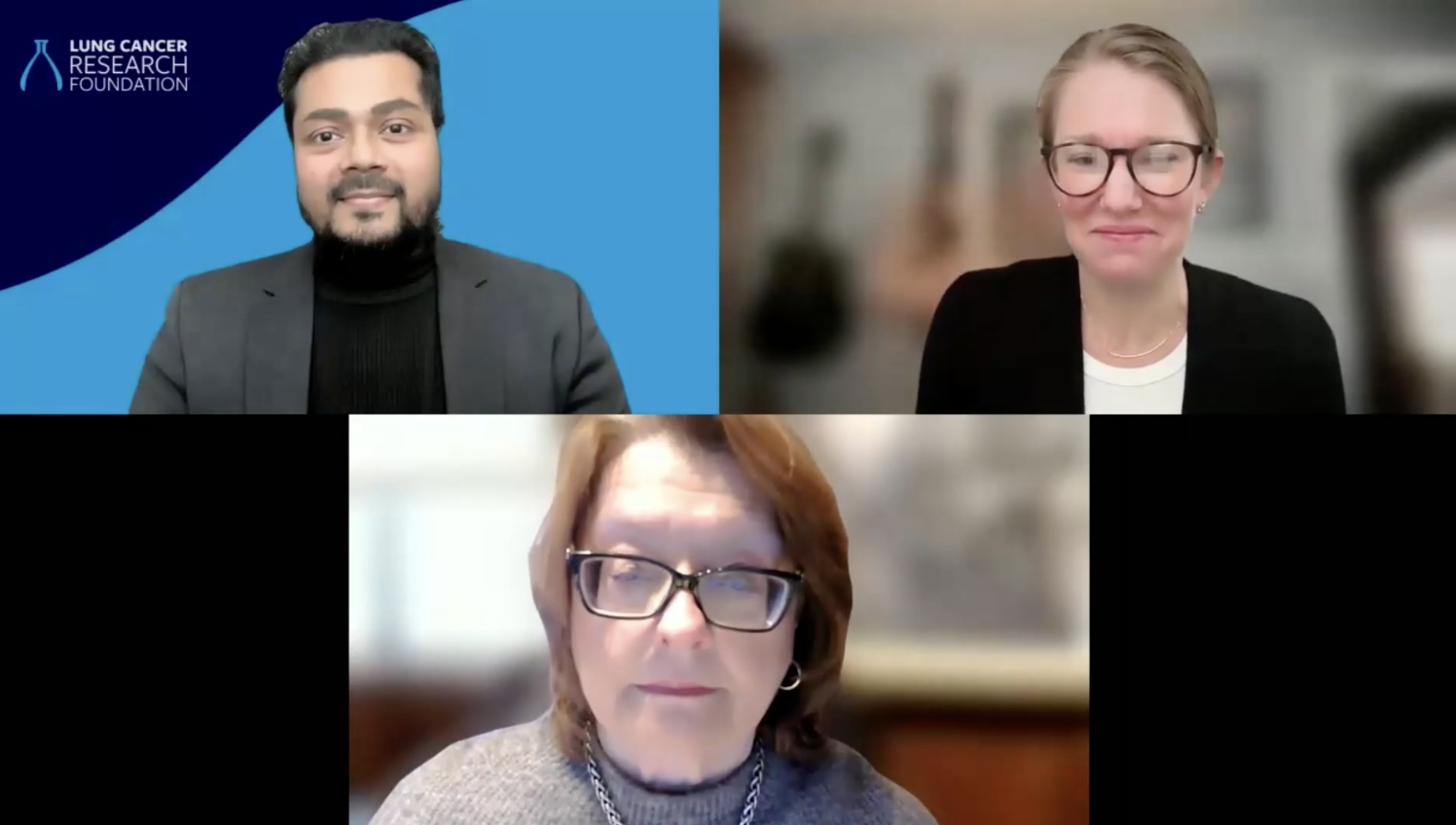
Joshua Reuss, MD, and Patrick Forde, MD, PhD, talked with moderator Isabel Preeshagul, DO, MBS, about developments from the 2026 IASLC Targeted Therapies of Lung Cancer meeting.
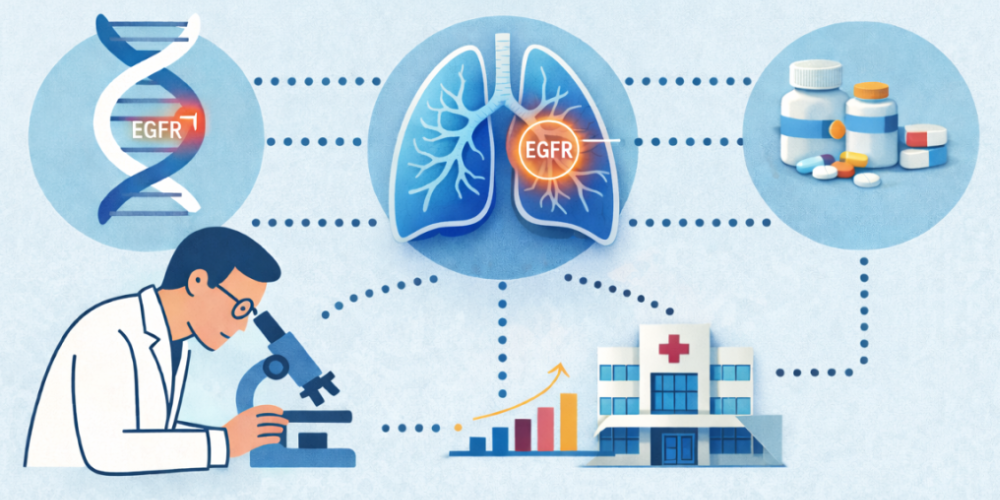
How Research Funding Helped Transform Lung Cancer Harboring EGFR mutation into a Manageable Disease
By Dhru Deb, PhD Senior Director, Research and Administration, LCRF
For more than two decades I have been watching the field of lung cancer harboring EGFR mutation evolve from a mystery to a map, from a crisis to something many patients now live with for years.
Before we begin, an important note: the EGFR-mutation in lung cancer is one of the most extensively studied areas in oncology. What follows highlights selected milestones and investigators—particularly those supported by the Lung Cancer Research Foundation (LCRF)—but it is not a comprehensive history. Many other scientists, clinicians, collaborators, and, most importantly, patients, have driven this progress forward. Their contributions are deeply valued, even if not individually named here.
When There Was Nothing
In the early 2000s, a lung cancer diagnosis often arrived with a quiet finality. The doctor might speak gently, choosing words like “aggressive,” while the details blurred together in the shock of the moment.
Sometimes the patient had never smoked. Sometimes they were in their early fifties, with a persistent cough that seemed ordinary at first—just something that wouldn’t go away. That was often how it began.
Back then, lung cancer was treated largely as one disease. Chemotherapy was the standard approach. Some patients responded. Many did not. There was no routine testing to look inside the tumor’s DNA. There was no roadmap.
Outcomes were often swift and unforgiving.
Family members would later learn that their loved ones likely had what we now call lung cancer harboring EGFR mutation—a subtype driven by specific changes in a gene called the epidermal growth factor receptor (EGFR). But in 2003, that knowledge had not yet reached the clinic.
2004: The Spark
In 2004, several research teams—including Thomas Lynch Jr., William Pao, Bruce Johnson, Tetsuya Mitsudomi, Katerina Politi, Mark Kris, Susumu Kobayashi, Pasi Jänne, Matthew Meyerson, Balázs Halmos —published landmark papers in The New England Journal of Medicine, PNAS USA, and Science. They identified specific EGFR mutations—most commonly exon 19 deletions and the L858R mutation—that made tumors exquisitely sensitive to drugs called EGFR tyrosine kinase inhibitors (TKIs).
For the first time, lung cancer was no longer one disease.
It was as if researchers had discovered that some tumors were powered by a single stuck accelerator pedal—and that there might be a way to ease off it.
Turning Discovery into Certainty
Science moves forward because someone asks, “But how does it really work?”
Raffaella Sordella, supported early by LCRF, helped answer that question. Her work explored what scientists call “oncogene addiction”—the idea that certain cancers become biologically dependent on a single mutated pathway for survival.
Her research showed that EGFR mutations weren’t just markers that happened to predict response. They were the engine itself.
That biological clarity mattered. It gave physicians confidence that targeting EGFR wasn’t guesswork—it was rational medicine.
The First Breakthroughs in the Clinic
By 2009, the phase III IPASS trial (Mok et al., NEJM 2009) demonstrated that patients with EGFR mutations responded far better to EGFR inhibitors than to chemotherapy. Japanese trials such as NEJ002 and WJTOG3405 confirmed it (Mitsudomi et al., Lancet Oncology, 2010).
Testing tumors for EGFR mutations became essential.
Marc Ladanyi, also supported by LCRF, helped build the genomic infrastructure to make that testing reliable and routine. Without accurate molecular diagnostics, these scientific breakthroughs would never have translated into real lives extended.
For patients diagnosed in 2011—the difference was immediate. Instead of starting chemotherapy, they began erlotinib after their tumor tested positive for an EGFR mutation.
In some cases, within weeks, their cough eased. Their scans improved dramatically.
For the first time, some patients were experiencing what felt like a miracle: pills instead of IV chemotherapy. Tumors shrinking in months, not after endless cycles.
The Setback: Resistance
But cancer adapts.
By 2015, many patients who initially responded began to relapse. Researchers identified a common culprit: a secondary mutation called T790M.
It was heartbreaking. For patients who had tasted hope, progression felt devastating.
Katerina Politi, supported by LCRF, used genetically engineered mouse models to show that resistance was not random chaos. It was evolution under pressure. Tumors changed in predictable ways.
Trever Bivona’s work expanded that understanding further, revealing that resistance could arise through “bypass” pathways—like traffic detours around a blocked road.
The message was profound: resistance wasn’t failure. It was biology. And biology could be studied.
Osimertinib: A Second Chance
Scientists designed a third-generation drug—osimertinib—to specifically target the T790M resistance mutation while sparing normal cells.
The AURA trials and later the FLAURA trial (Soria et al., NEJM 2018; Ramalingam et al., NEJM 2020) showed improved progression-free and overall survival. Osimertinib became the first-line standard of care.
Jonathan Ostrem’s research into mutant-selective drug design helped refine how these targeted therapies bind precisely to altered proteins—like crafting a key that fits only the damaged lock.
For some patients, when their cancer progressed in 2016, a blood test—called a liquid biopsy—detected T790M in circulating tumor DNA. They switched to Osimertinib and their disease came under control.
When Cancer Changes Identity
Yet even osimertinib is not the end of the story.
Some tumors develop additional changes—MET amplification, C797S mutation, or even transform into a different type of cancer, such as small cell lung cancer.
Matthew Niederst, supported by LCRF, helped define this phenomenon of lineage plasticity—the idea that cancer cells can change identity under treatment pressure.
It was a sobering realization: cancer is not static. It evolves.
But now doctors monitor it in real time. Liquid biopsies, advanced genomic profiling, and structured sequencing strategies—refined by clinicians like Zofia Piotrowska—help guide what comes next.
Today, options after resistance include:
Bispecific antibodies
Antibody–drug conjugates
Fourth-generation EGFR inhibitors in development
Rational combination therapies
What once was a cliff is now, increasingly, a series of steps.
From Months to Years
Two decades ago, a lung cancer harboring EGFR mutation diagnosis often meant months.
Today, many patients live years. Brain metastases—once especially devastating—can often be controlled with targeted treatments designed to cross into the central nervous system. As cancers evolve, patients may move through sequential targeted therapies, each tailored to new molecular changes. Quality of life, once an afterthought in the urgency of treatment, has become a central goal alongside longevity.
The journey is rarely simple. Patients may cycle through multiple lines of therapy. There are setbacks, scans that bring anxiety, and difficult decisions along the way. But there are also birthdays once feared lost, holidays once thought unreachable, futures that expand beyond the original prognosis.
For families who lost loved ones before these advances, the grief does not vanish. It lingers, reshaped but enduring. Yet many find meaning in witnessing how profoundly the story has changed—how scientific discovery has transformed a once-uniform diagnosis into a series of treatable, evolving chapters. And in that transformation, there is both remembrance and hope.
What This Means
The transformation of Lung cancer harboring EGFR mutation reflects a complete arc of translational science:
Foundational molecular discovery
Diagnostic implementation
Resistance biology
Evolutionary modeling
Precision drug design
Clinical sequencing strategy
LCRF’s sustained investment helped accelerate each step—supporting scientists willing to ask difficult questions before the answers were obvious.
For families who lost loved ones before these therapies existed, this progress carries both sorrow and meaning. For patients diagnosed today, it offers something once unimaginable:
Time. Options. Hope.
The story of lung cancer harboring EGFR mutation is not finished. Resistance still occurs. Cure remains elusive. But what was once a rapidly fatal disease is now, for many, a chronically managed condition guided by molecular insight.
And every breakthrough rests on decades of research—and on the patients, donors, advocates and research partners who made that research possible.
Two new lung cancer research grants aim to accelerate discoveries and enhance outcomes in Small Cell Lung Cancer treatment
NEW YORK, NY (February 24, 2026) – The Lung Cancer Research Foundation (LCRF) announces a new research collaboration with AstraZeneca aimed at driving progress in small cell lung cancer (SCLC) with two grant awards, 2026 LCRF | AstraZeneca Research Award on Strategies Towards Improving the Treatment of Small Cell Lung Cancer and 2026 LCRF | AstraZeneca Research Award on Strategies Using Patient Advocacy to Improve Outcomes in Small Cell Lung Cancer.
Lung cancer is responsible for more deaths worldwide than any other cancer, accounting for an estimated 124,990 deaths annually in the United States alone.1 Small cell lung cancer (SCLC) represents 13-15% of lung cancer cases with a 5-year survival rate of less than 7%.1,2 It is characterized by rapid proliferation and early metastatic spread. Only a small fraction of patients present with earlier stage disease that is amenable to potentially curative treatment with combined modality therapy. Lung cancer screening initiatives have resulted in a 20% reduction in mortality for non-small cell lung cancer (NSCLC), but have not had the same benefit for SCLC patients, probably because of the aggressive nature of the disease.
While there have been significant advancements in the treatment of NSCLC, there has been very little movement for SCLC, both in the understanding of the biology of SCLC and treatment. Recently, there has been a characterization of SCLC subtypes that may have distinct therapeutic vulnerabilities. Untreated SCLC is initially sensitive to DNA-damaging agents with impressive clinical response. Unfortunately, treatment resistance is inevitable and second-line therapy is less effective. The introduction of immunotherapy in first-line treatment has resulted in modest improvements in the treatment of extensive SCLC and a significant improvement in overall survival for patients with limited stage disease.3,4,5
There have been attempts at identifying targets for more directed treatment. DLL3, an inhibitory Notch pathway ligand, represents a potential therapeutic target in SCLC because it is frequently expressed on the surface of SCLC tumor cells. Discovering both biomarkers that predict treatment benefit and novel therapeutic targets represents a great area of need to make substantial progress in SCLC.
Considering that scientists are just scratching the surface when it comes to understanding the biology of SCLC and given that most therapeutic options available to date are usually not curative, there is a need for novel approaches to treat SCLC and improve outcomes for patients with the ultimate intention of cure.
Understanding the biology of a disease and developing treatments is often supported and amplified by patient advocacy. Diligent patient advocacy has been responsible for advancements in a number of diseases, including HIV/AIDS, breast cancer, and Alzheimer’s disease. Despite it being the leading cause of cancer deaths in the US, lung cancer has the smallest advocacy score of any major disease.6 One of the greatest barriers to developing effective advocacy initiatives has been the stigma associated with lung cancer. Given the limited research and clinical progress in SCLC, it is unsurprising that advocacy for this patient population represents a critical and urgent unmet need.
The 2026 LCRF | AstraZeneca Research Award on Strategies Towards Improving the Treatment of Small Cell Lung Cancer is a $500,000, three-year award that will focus on furthering the development of novel strategies towards improving the treatment of SCLC. Work supported through this mechanism will address important areas of need across the entire care continuum and have the immediate potential to increase survivorship. It is expected that correlative translational research will be proposed that will enhance the understanding of SCLC.
The 2026 LCRF | AstraZeneca Research Award on Strategies Using Patient Advocacy to Improve Outcomes in Small Cell Lung Cancer is a $250,000, two-year award that will focus on furthering the development of strategies towards improving the outcomes of SCLC patients through patient advocacy. Work supported through this mechanism will address important areas of need across the entire care continuum and have the immediate potential to increase research efforts, quality of life and survivorship.
“A deeper understanding of small cell lung cancer biology is essential to advancing more precise and effective therapies—and ultimately improving care and outcomes for people living with this challenging disease,” said Nabil Chehab, US Medical Head, Lung Cancer, AstraZeneca. “We’re proud to partner with the Lung Cancer Research Foundation to accelerate research and to engage patients and their support networks, moving small cell lung cancer science forward.”
“LCRF’s research program is centered on delivering solutions for lung cancer patients. Including patients in research ensures that their most pressing needs are met, both near-term and long-term,” says Dr. Antoinette Wozniak, Chief Scientific Officer for LCRF. “Patients are our partners in discovery and their voices help define research priorities and drive meaningful outcomes. Collaboration is the key to addressing unmet needs for the community. I know that AstraZeneca shares our commitment to provide hope through impactful research.”
Requests for Proposals will be announced in the coming months. To be notified when submission will be accepted, please visit LCRF.org/RFPlist.
# # #
About the Lung Cancer Research Foundation (LCRF) The Lung Cancer Research Foundation® (LCRF) is the leading nonprofit organization focused on funding innovative, high-reward research with the potential to extend survival and improve quality of life for people with lung cancer. LCRF’s mission is to improve lung cancer outcomes by funding research for the prevention, diagnosis, treatment, and cure of lung cancer. To date, LCRF has funded 450 research grants, totaling nearly $53 million, the highest amount provided by a nonprofit organization dedicated to funding lung cancer research. For more information about the LCRF grant program and funding opportunities, visit LCRF.org/research.
Contact: Lung Cancer Research Foundation (LCRF) Sheila Sullivan, Senior Director, Marketing & Communications ssullivan@LCRF.org
American Cancer Society. Cancer Facts & Figures 2026, Atlanta: American Cancer Society; 2026.
Megyesfalvi Z, Gay CM, Popper H, et al. CA Cancer J Clin. 2023; 73(6): 620-652.
Horn L, Mansfield AS, Szczęsna A, et al. N Engl J Med. 2018; 379(23): 2220-2229.
Paz-Ares L, Dvorkin M, Chen Y, et al. Lancet. 2019; 394(10212): 1929-1939.
Cheng Y, Spigel D, Cho BC, et al. N Engl J Med. 2024; 391(14): 1313-1324.
Best RK. Oxford University Press. 2019; 10.1093/oso/9780190918408.001.0001.
LCRF’s science team discusses the 2026 research grant program, why LCRF and OUCH-I are backing research on environmental factors and lung cancer, and how previous research is connected with treatments that are now benefiting patients. Watch the clip below.
Featured: Aubrey Rhodes, LCRF Executive Director Dhru Deb, PhD, Senior Director, Research & Administration Antoinette (Toni) Wozniak, MD, Chief Scientific Officer
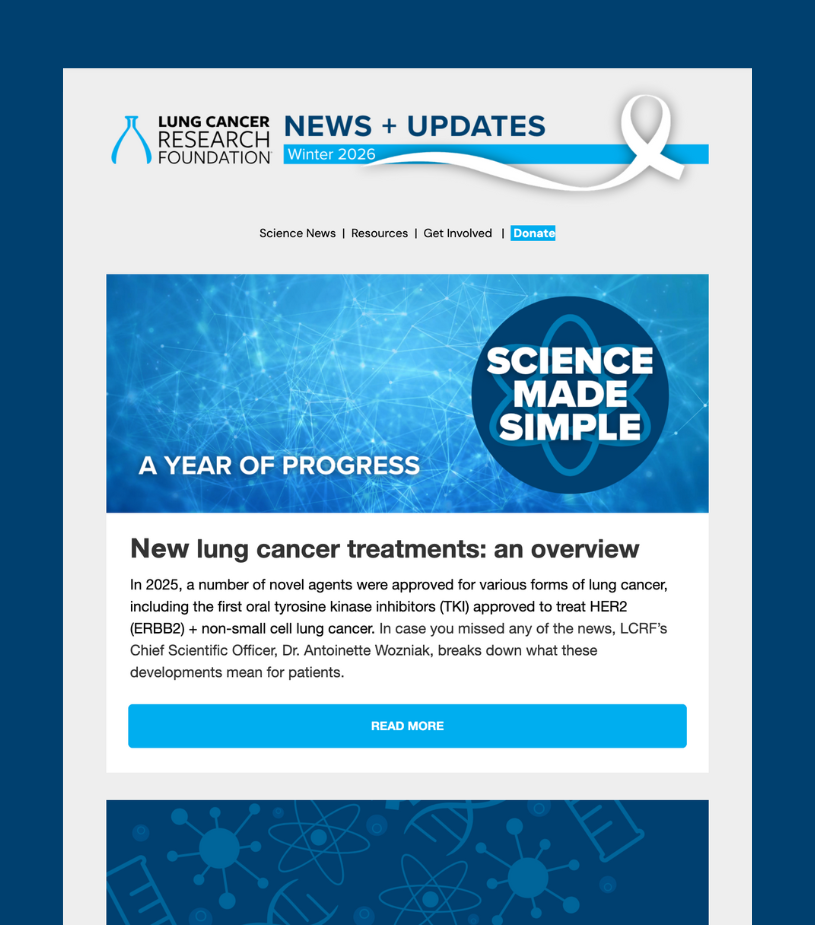
LCRF publishes a quarterly e-newsletter highlighting the latest developments in the lung cancer space and announcing upcoming events. The e-news also features stories from patients and supporters.
In a year when a lack of federal funding threatened to stall progress in lung cancer research, the lung cancer community certainly stepped up. Support from generous donors and fundraisers made it possible for LCRF to fund $5 million in research grants during 2025 – more than any other funding year in its history.
The record 21 projects funded were selected from hundreds of applications, representing some of the brightest minds committed to improving outcomes for lung cancer patients.
A wide range of topics are being studied, from novel disease targets, predicting which patients will benefit most from immunotherapy, targets for small cell lung cancer, strategies for inhibitor-resistant lung cancer, screening in emergency patients, and more. These projects demonstrate profound promise to make a sustained and lasting impact on lung cancer research and outcomes.
“Our Scientific Advisory Board and Research Advocates reviewed hundreds of submissions, and we’re excited to support the work of these grantees,” said Colleen Conner Ziegler, Chair of LCRF’s Board of Directors and a patient with stage 4 lung cancer. “Keeping patients’ voices at the forefront of the research process is of utmost importance to LCRF and is evident in the projects that were selected for funding.”
Dr. Kathryn O’Donnell
“Each year, we are presented with many ideas that have the potential to change how we approach lung cancer prevention, detection and treatment,” said Kathryn O’Donnell, PhD, chair of LCRF’s Scientific Advisory Board and Associate Professor, Molecular Biology, UT Southwestern Medical Center. “At LCRF, we’re committed to funding the most innovative research projects that will have a positive impact on the lives of people living with lung cancer.”
“Funding investigators early in their careers is often the catalyst to keeping scientists focused on advancing their best science,” Dr. O’Donnell added. “With the current uncertainties of federal funding, including the elimination of the Congressionally Directed Medical Research Program’s lung cancer program, funding from organizations like LCRF becomes even more important in maintaining momentum in lung cancer research.”
LCRF funds projects that demonstrate profound promise to make a sustained and lasting impact on lung cancer research and outcomes. The strength of LCRF’s research program is underscored by the trust, generosity, commitment, and vision of its partners, fundraisers, and donors.
Aubrey Rhodes
“LCRF is grateful to everyone who has made this grant cycle the largest in its history – 21 grant awards for more than $5 million,” said Aubrey Rhodes, LCRF’s Executive Director. “Ensuring that lung cancer research maintains momentum in an uncertain funding environment is of utmost importance. LCRF is committed to filling the funding gap. Working toward improving survival for people with lung cancer is our priority.”
With this year’s grants, LCRF’s total active research portfolio supports more than $21 million in lung cancer research projects. More funding for research means greater opportunities to uncover advances that will have a positive impact for patients.
I have been a Medical Oncologist for over 40 years, and I have had the privilege of witnessing an explosion of advancements in the treatment of lung cancer. It has now been over 20 years since EGFR’s pivotal role in lung cancer was fully realized. Since then, there have been a tremendous number of Federal Drug Administration (FDA) approvals for novel agents in the management of lung cancer.
Why it’s important
In 2025, a number of novel agents were FDA approved for various forms of lung cancer.
Two oral drugs, zongertinib and sevabertinib, for the treatment of non-small cell lung cancer (NSCLC) patients whose tumors have HER2 (ERBB2) mutations and who have received prior systemic therapy.
In addition, sunvozertinib was approved for NSCLC with EGFR exon 20 mutations and larotrectinib for ROS1 and NTRK fusions.
For the first time, two antibody-drug conjugates were approved for NSCLC treatment.
Telisotuzumab, a c-Met-directed antibody drug conjugate (ADC), was approved for adults with NSCLC with high c-Met protein overexpression who have received prior therapy.
Agents that already are FDA approved have found an indication in the treatment of lung cancer. An example is datopotamab deruxtecan, another ADC, that already is being used for the treatment of breast cancer and is now approved for patients with EGFR mutated NSCLC who have progressed on prior therapy.
What it means for patients
This ‘Science Made Simple’ does not include all the progress that has been made this past year, but these FDA approvals represent important advances in areas of unmet need, emphasizing the importance of molecular testing and the participation of patients in clinical trials. These advances would not be possible without the contribution of patients by their willingness to participate in clinical research.
What to look for
The 5-year survival rate for lung cancer has improved significantly, rising to 27% in 2025, compared to 17% in 2014. This result is attributed to advancements in treatment and early detection. 27% is clearly an improvement, but it is not good enough and more work needs to be done.
In the coming years, look for more drug approvals and efforts to detect lung cancer at an earlier stage, particularly in patients who do not meet the current screening criteria (i.e. never smokers).
Look for more advancements in the treatment of small cell lung cancer, which has been a particularly stubborn disease to treat but where there has been some recent progress.
LCRF continues to support researchers who are trying to understand the biology of lung cancer in order to develop novel therapies and overcome resistance to treatment.
The Food and Drug Administration (FDA) has approved amivantamab to be given under the skin, which is called a subcutaneous (SQ) injection, for adult patients with the same conditions where amivantamab is already approved to be given through a vein, or intravenously (IV).
Why it’s important
Amivantamab is a type of treatment called a bispecific antibody, which means that it has two different targets, EGFR and MET. It has been approved for the treatment of non-small cell lung cancer (NSCLC) in several situations:
For NSCLC with EGFR exon 20 insertion mutations, it can be used in combination with chemotherapy as initial treatment, or on its own if disease has progressed on chemotherapy.
For NSCLC with common EGFR mutations (exons 19 and 21), it can be used in combination with lazertinib as initial treatment, or in combination with chemotherapy if the disease has progressed after treatment with an EGFR targeted therapy (usually osimertinib).
The SQ injection of amivantamab was evaluated in the PALOMA-3 trial. Over 400 patients with advanced NSCLC and common EGFR mutations received either SQ or IV amivantamab in combination with lazertinib.
The trial showed that patients who received SQ amivantamab had similar treatment responses and survival outcomes as patients who received IV amivantamab.
What it means for patients
An important consideration for patients is safety and convenience. The safety profile of the SQ amivantamab was generally similar to the safety profile of the IV amivantamab, with one exception. Infusion reactions occurred less often for SQ amivantamab (13% of patients) compared to those who received IV amivantamab (66% of patients).
Other side effects with either form of amivantamab could still include interstitial lung disease/pneumonitis, venous thromboembolic events when used with lazertinib, skin rash, ocular toxicity, and embryo-fetal toxicity.
Another important factor is that the SQ administration allows patients to spend less time at their doctor’s office receiving amivantamab, which contributes to their overall quality of life.
What to look for
The SQ administration of amivantamab is likely to replace the IV administration of the drug in most circumstances and could be employed in clinical trials as well. Research that is geared toward reducing side effects and changing drug administration in order to improve a patient’s quality of life is very important. It is likely that there will be more clinical trials evaluating other treatments with the sole purpose of reducing side effects and decreasing the time that patients spend getting their treatments.