The National Cancer Institute (NCI) recently announced its Pragmatica-Lung Study (or S2302) is now enrolling patients. This is one of the first NCI-supported clinical trials to use a trial design that removes many of the barriers that prevent people from joining clinical trials. This “pragmatic” approach aims to increase accessibility to clinical trials.
How it works:
The Pragmatica-Lung Study is a large lung cancer trial for patients with non-small cell lung cancer that has returned after previous treatment with immunotherapy and chemotherapy. Patients will be randomly selected to receive pembrolizumab (immunotherapy) and ramucirumab (anti-angiogenesis drug) or standard chemotherapy. This trial may help doctors find out if giving ramucirumab with pembrolizumab is more effective at treating patients with recurrent non-small cell lung cancer than standard chemotherapy.
Why it’s important:
It has a simpler design so that more patients can participate, and more oncologists can offer the trial to their patients; particularly those who are not affiliated with large academic institutions. This will increase the diversity of trial participants.
What it means for patients:
By increasing trial participation, especially among populations normally excluded from clinical trials, results of trials will be more reflective of the actual disease community and improve health equity.
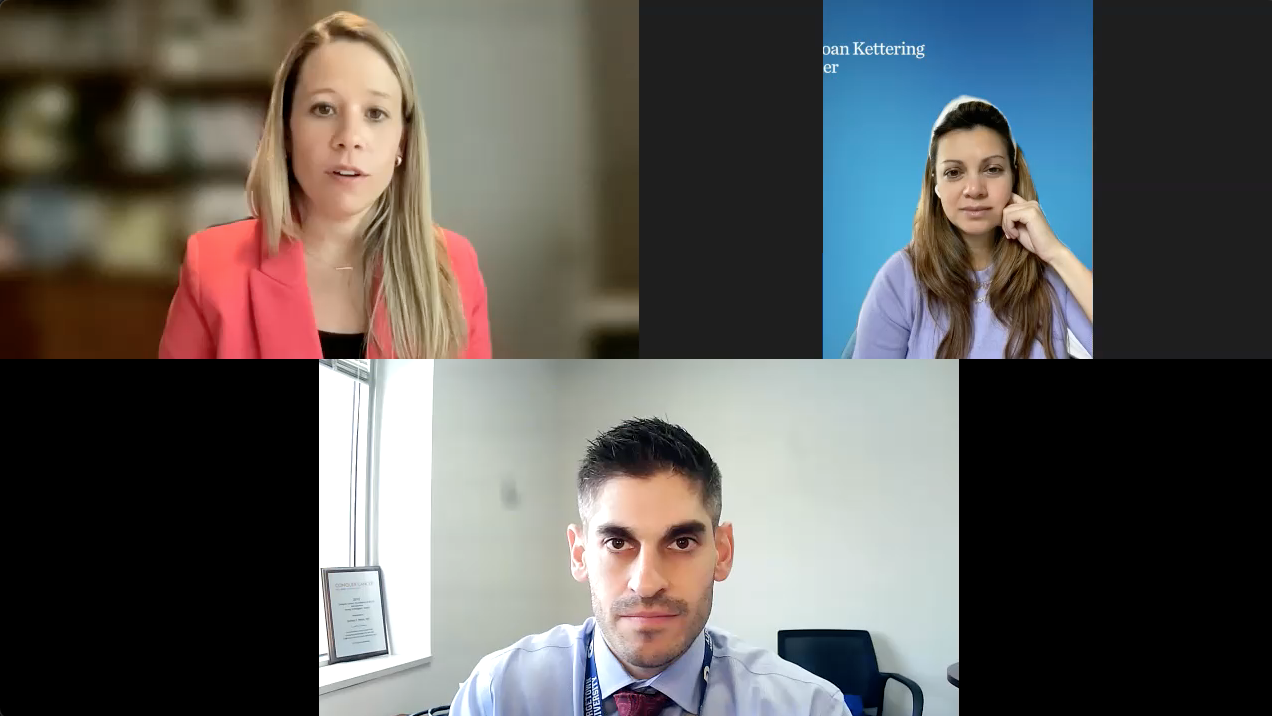
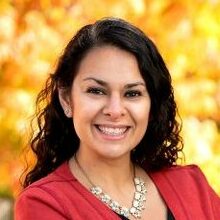
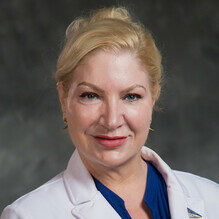
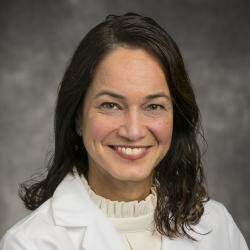
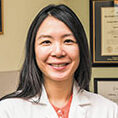
Dr. Devika Das joined moderator Dr. Isabel Preeshagul on April 26 to highlight barriers and disparities seen in clinical trials and biomarker testing, how we as a community can address them, and ways patients can advocate for themselves. Watch the recording below.
I had a slight cough that wouldn’t go away, and I could not do my normal workout on the StairMaster.
I went to my doctor to see if I was well enough to get vaccinations for a hiking trip to Patagonia. Although my lungs sounded fine, she sent me for a chest X-ray followed the next day by a CT scan. After she saw my scan, she immediately scheduled an appointment with a pulmonologist who cleared her schedule and did a bronchoscopy the next day. Everyone was dressed in “space suits” because they thought my scan might have shown tuberculosis! A week later I had a lung wedge resection. Two weeks later I got the news… NSCLC with EGFR+ Stage 4! I believe that, because I had none of the risk factors and I took good care of myself physically, everyone made the extra effort to get a quick diagnosis.
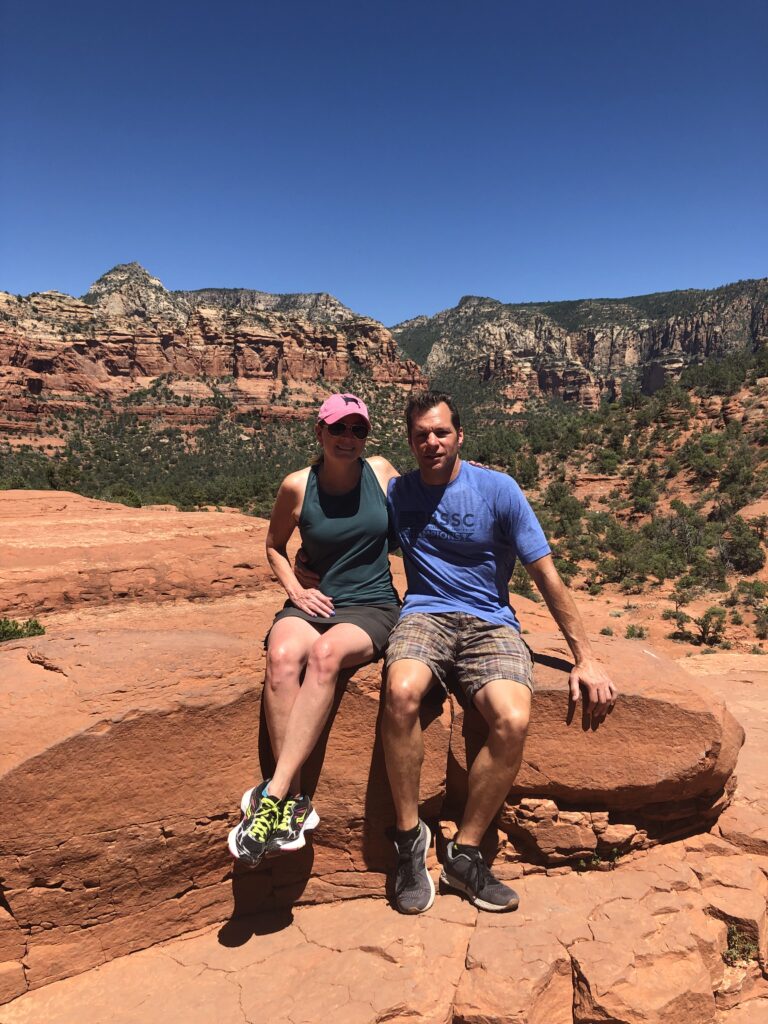
Gerri and her husband at Mt. Snaefell in Iceland, 2017
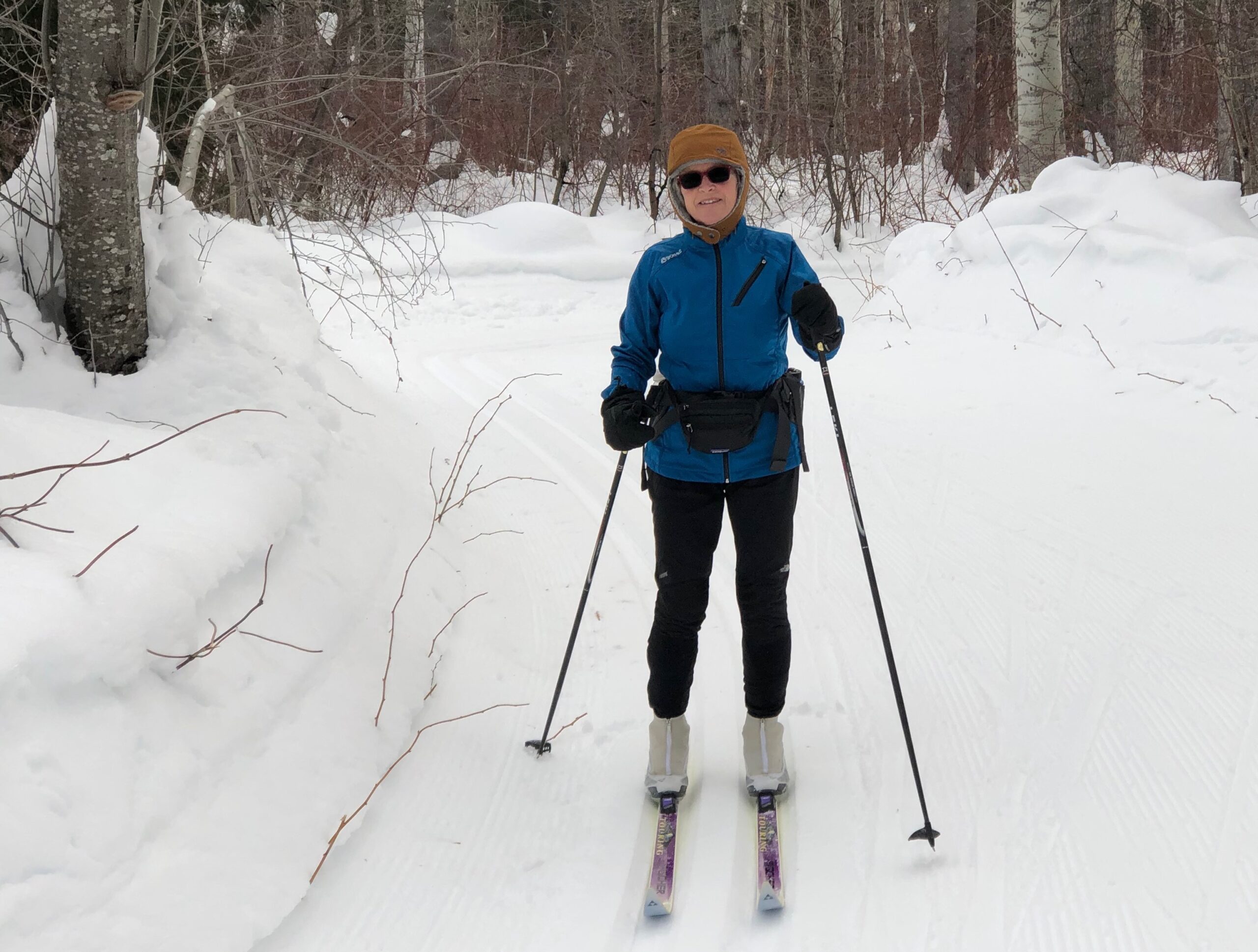
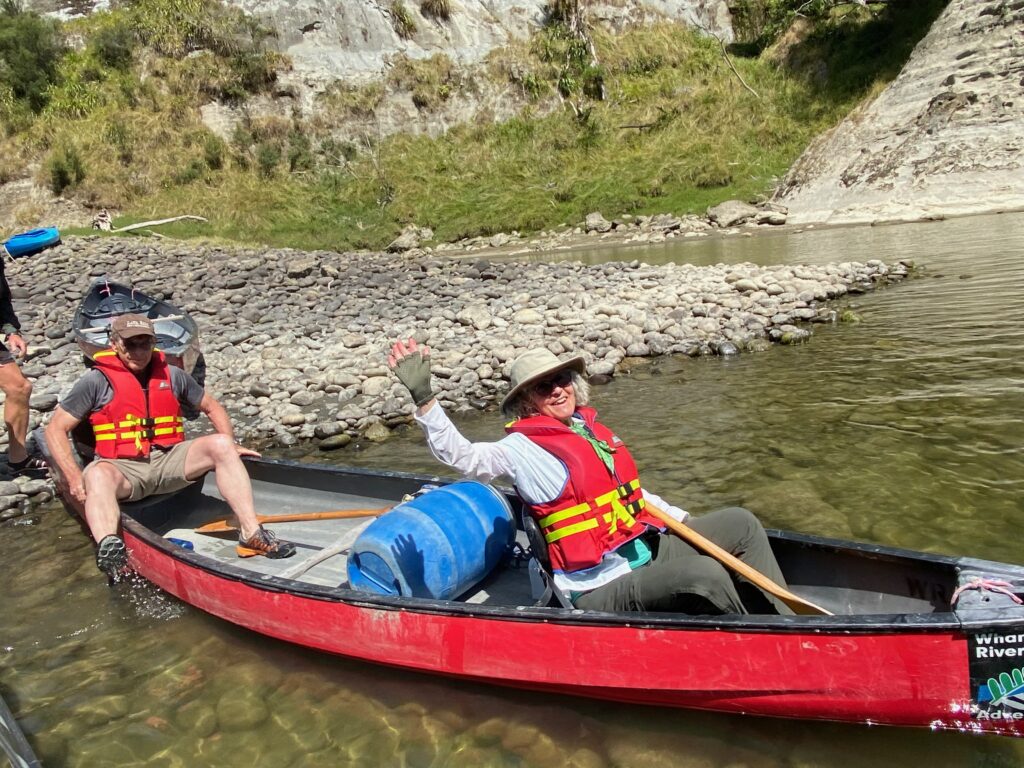
My life was suddenly turned upside down! For years, my husband and I had wanted to go to Patagonia, and now we might not be able to go. It was all a total shock! I was the last person anyone would expect to have lung cancer. I am an athlete. a tennis professional, hiker, kayaker, cross country skier, wife, mother, and grandmother.
My daughter was visiting us when I received the diagnosis. I told her I got the best news possible (EGFR+), and she burst into tears. She asked why I was pretending everything was OK when it wasn’t. I told her I have a choice … I have been dealt this hand. I can accept it and go on living my life, or I can be miserable and angry that I have cancer. She told me how inspiring that message was for her. A few years later, she followed my example when she was diagnosed with breast cancer.
The people who supported me
My husband has been my rock. He says we’ll get through this TOGETHER. He challenges me to do things out of my comfort zone and is incredibly patient when we hike… even carrying my pack uphill if we’re on a long hike! He is my “personal assistant” which includes planning our next adventures. We walk every day for about three miles with elevation so we can enjoy our frequent hikes in the Oregon and Washington Cascades or in places further away.
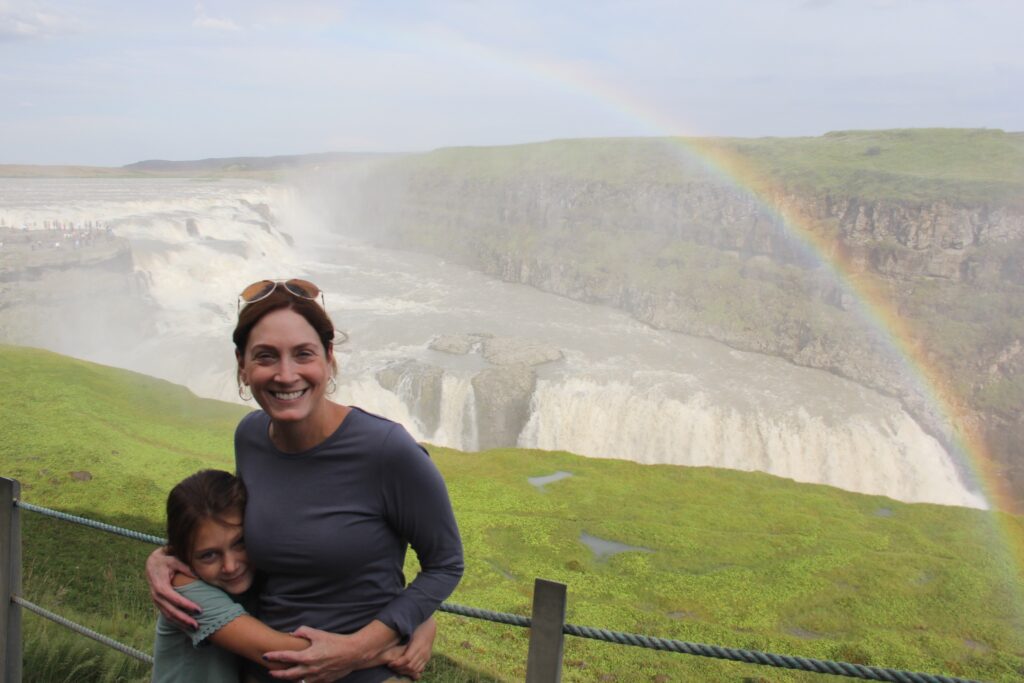
New Zealand, 2020
Since my diagnosis, we have had hiking adventures in Patagonia, the Tetons, all five Utah National Parks, the North Island of New Zealand, and Hornstrandir Nature Preserve in Iceland (which was a REAL adventure)! We went with an Icelandic group, hiked 13.5 difficult miles one day, and were totally immersed in Icelandic culture. Two years after my diagnosis, we did our last 13.5 mile hike on the Tongariro Alpine Crossing in New Zealand. We realize we will not be able to do anything quite that ambitious again, but we do have hiking trips planned to Newfoundland, the South Island of New Zealand, and Tasmania.
My oncologist has been very supportive, encouraging me to go on these adventures and to continue living my life.
After my diagnosis, my tennis manager, students, and teams understood my priorities had changed. They encouraged me to do things for ME, without worrying about them every week.
Maintaining hope
Soon after my diagnosis, I talked with the social worker/palliative care professional in my oncologist’s office. She helped me develop strategies for maintaining hope and for coping. She encouraged me to work toward goals, to be creative, and to plan activities… in other words, to LIVE! I started quilting again and have donated almost 20 lap quilts to nursing homes, outreach programs, and senior centers. This gives me a sense of purpose as well as using up my huge fabric stash!
My social worker also suggested I do some form of meditation. I have always considered my hiking, kayaking, and cross country skiing to be meditative because of the repetitive movements and the healing time spent in Nature. I took her suggestion and added a form of qigong (Shibashi) that fits my personality and helps me to be more in tune with myself through breathing, visualization, and movement.
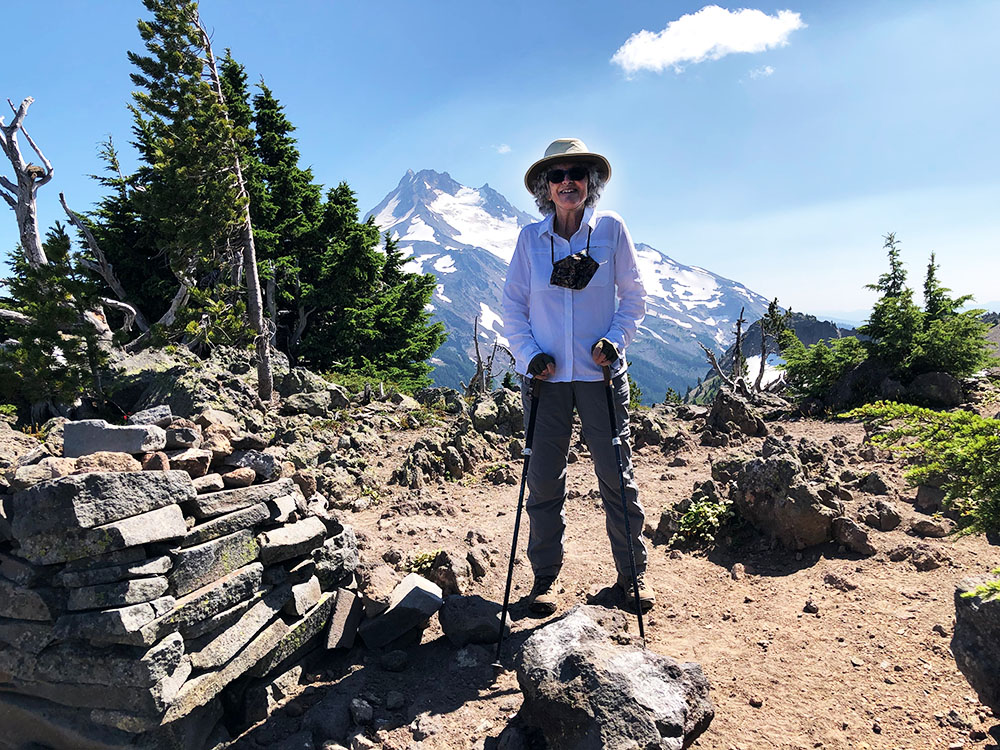
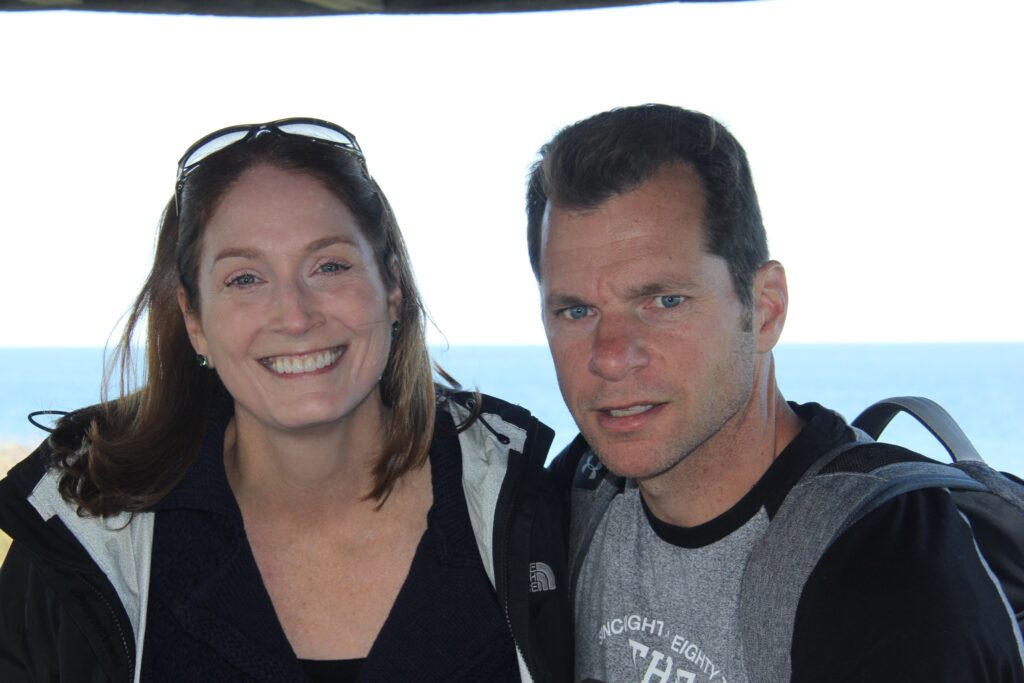
Mt. Jefferson in Oregon, 2020
I have found hope in the stories of survivors in the lung cancer community. Many of these stories come from you. The first story that inspired me, though, was in the New York Times in January, 2018. It was titled: “When the Lung Cancer Patient Climbs Mountains.” I thought, if he can hike in Nepal, I can certainly hike in Patagonia! And I DID! Five weeks after starting targeted therapy, I hiked 90 miles there!
I also read the informative newsletter from EGFR Resisters and watch videos of some of the topics covered. I am hopeful because we are learning so much through new research. I am grateful for those who are so good at raising funds for this research.
I have participated in two LCRF Free to Breathe Walks with a friend. I also enjoy watching the #TogetherSeparately meetings on Zoom. I find them educational and inspirational. They also help me to feel more a part of the lung cancer community, which is especially important since I am not on social media.
For those with a new diagnosis
I would tell someone just starting treatment:
Lung cancer does not define you… you are much more than that!
Keep up your fitness level… it will help you in so many ways!
Make a bucket list and start on it NOW… make plans so you have a goal or something to look forward to. (I am on my second bucket list!)
Do something that nourishes your soul… hiking, music, sewing, art, teaching, etc.
Do not hesitate to ask for palliative care early in your treatment… it will help you lead your best life.
Control what you can control… and control your reactions to everything else.
I have been extremely fortunate to have a very supportive family, a great oncologist, really good health insurance, and the ability to travel. I am also grateful for all of the advocacy and research in lung cancer that has given hope to so many of us.
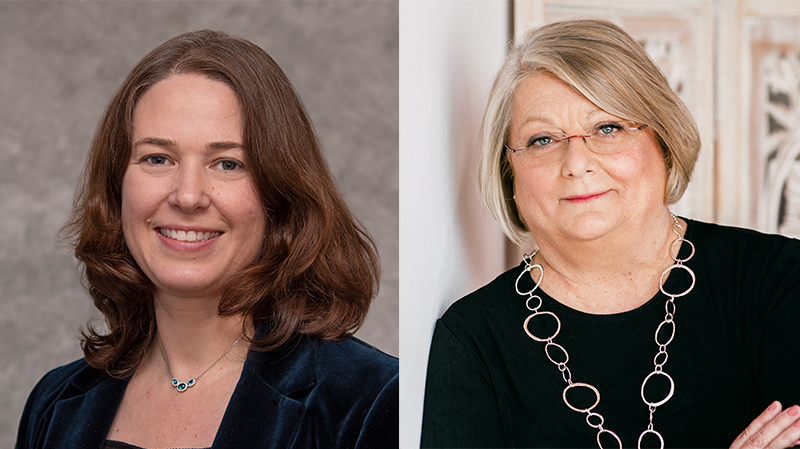
Foundation honors contributions of Katerina Politi, PhD and Colleen Conner Ziegler
NEW YORK, NY (April 18, 2023) – The Lung Cancer Research Foundation announced today its honorees for the 2nd annual Evening of Innovation Gala, which will be held on September 26, 2023 at the Metropolitan Club in Manhattan.
Katerina Politi, PhD, is chair of LCRF’s Scientific Advisory Board, a volunteer role she has held since 2019, and a member of LCRF’s Board of Directors, where she serves on the Executive Committee. Dr. Politi is also Associate Professor of Pathology and Internal Medicine, Yale School of Medicine; Co-Leader of the Cancer Signaling Networks Research Program and Scientific Director of the Center for Thoracic Cancers, Yale Cancer Center. Her research has shed light on the biology of oncogene-driven lung cancers and revealed mechanisms of sensitivity and resistance to cancer therapies.
Dr. Politi is a two-time LCRF grant recipient: in 2010 and 2013 she received grants to study mechanisms of resistance to targeted therapies. The LCRF funding Dr. Politi received was the foundation for numerous federal awards, including NIH R01s, a U01 and contributed to a SPORE grant in lung cancer. In addition to her faculty appointments, running a research lab, and her volunteer roles, Dr. Politi has been a mentor to innumerable scientists and is an inspiration to many in the lung cancer community.
“LCRF jump-started my independent lung cancer research career,” said Dr. Politi, “It has been my privilege to serve as both its Scientific Advisory Board chair and on the Board of Directors. To have the organization bestow this honor onto me is humbling, and I accept it with great pride and gratitude. I am thrilled to receive this honor with Colleen Conner Ziegler who has made tremendous contributions to progress in lung cancer.”
Colleen Conner Ziegler, member of LCRF’s Board of Directors’ Executive Committee and member of its Scientific Executive Committee, is a lung cancer survivor and active patient advocate. Ms. Conner Ziegler, diagnosed with Stage IV ALK-positive non-small cell lung cancer in May 2015, has been a tireless advocate on behalf of patients with lung cancer for nearly eight years. In that role, she has initiated and supported patient-centered research, increased awareness of lung cancer, mentored newly diagnosed lung cancer patients, and served as a consumer reviewer for the Department of Defense Lung Cancer Research Program.
Ms. Conner Ziegler has co-founded several organizations, including Life and Breath as well as ALKFusion, and co-authored and presented a Patient Advocacy poster at the 2019 World Conference on Lung Cancer in Barcelona, Spain. She was integral in helping LCRF develop its three-year strategic plan in 2021 and recently, its Research Roadmap, guiding the organization’s future investments in lung cancer research.
“I am absolutely honored and thank LCRF for this honor!” remarked Ms. Ziegler. “I am so proud to be part of the LCRF family and in some ways be part of changing the landscape of lung cancer with all of you. I am honored to be named with Dr. Politi, who I hold in such high regard. And so very proud that LCRF really “walks the talk” when we speak of patient advocacy.”
“LCRF has benefited immensely from these two remarkable women,” said Dennis Chillemi, Executive Director for the foundation. “Dr. Politi has stewarded LCRF’s scientific program to expand how we address the pressing needs of the lung cancer community, has served in several volunteer capacities for the organization, and willingly shares her time and expertise with us. Ms. Conner Ziegler, similarly, serves in multiple volunteer capacities for LCRF – on the Board of Directors’ Executive Committee, as well as our Scientific Executive Committee as its patient advocate lead, helping to ensure that we include the patient voice in all aspects of our research programs. We are indebted to them both, not just for what they have contributed to LCRF, but for all they have given to the lung cancer community at large.”
The 2023 Evening of Innovation Gala is scheduled to take place at 6 pm on Tuesday, September 26, 2023 at the Metropolitan Club in New York City. More details can be found at LCRF.org/gala.
###
About the Lung Cancer Research Foundation (LCRF) The Lung Cancer Research Foundation® (LCRF) is the leading nonprofit organization focused on funding innovative, high-reward research with the potential to extend survival and improve quality of life for people with lung cancer. LCRF’s mission is to improve lung cancer outcomes by funding research for the prevention, diagnosis, treatment, and cure of lung cancer. To date, LCRF has funded 409 research grants, totaling more than $42 million, the highest amount provided by a nonprofit organization dedicated to funding lung cancer research. For more information, visit LCRF.org.
Dr. Susan Combs Scott and Dr. Joshua Reuss joined Dr. Isabel Preeshagul on April 14 for Part 2 of our #TogetherSeparately livestream on topics discussed at the 2023 IASLC Targeted Therapies of Lung Cancer Meeting.
This webinar was a follow-up to last month’s IASLC Targeted Therapies Recap with Dr. Stephen Liu and Dr. Zofia Piotrowska, which you can watch here.
An estimated 10–25% of lung cancers worldwide occur in people who have smoked fewer than 100 cigarettes in their lifetime – categorized as “never smokers.” Lung cancer in this group is more frequent in women, although this varies greatly by geographic region. Findings from the TRACERx study on pollution and lung cancer – funded in part by LCRF – were presented at the ESMO Congress last year, have undergone peer review, and were published last week.
The good news:
Scientists examined information from over 400,000 people from the UK and Asian countries, comparing rates of EGFR mutant lung cancer in areas with different levels of pollution. They found higher rates of EGFR mutant lung cancer, as well as higher rates of other types of cancer, in people living in areas with higher levels of pollution. Since this is a lung cancer more common in non-smokers, it was felt that the pollution particles were causing the lung cancer. By studying the effects of pollution in mice and human cells it is felt that inflammation from the pollution turns on the cancer process in cells that may already have some abnormalities but are asleep.
Why it’s significant:
This finding is important because previously, it was thought that the pollution itself causes changes in the DNA that result in cancer. Although this could still happen, this research suggests that it may be inflammation from the pollution that turns on the malignant process in cells that have some natural damage from aging or exposure to other substances.
How this can impact patients:
This discovery may be important in how prevention of lung cancer is approached. Reducing inflammation through diet or medications may be used as a prevention strategy in the future.
What else you should know:
We are beginning to see that progress is being made regarding understanding how lung cancer develops. It is also important for governments to continue to try and control air pollution because of the negative impact it has on the health of the world’s population.
Jen and I created an enviable life together. Together, we traveled the world, enjoyed professional success, and thrived as parents to our two young children. Then one night, after she finished a long shift as an anesthesiologist, a surgeon friend of hers insisted on giving her an X-ray to investigate a persistent cough. She certainly didn’t suspect that there was a tumor lurking in my lung, waiting to wreak havoc on our life. Jen never smoked and was 44.
On February 9, 2018, my wife, Dr. Jennifer Zannini-Cipriani was diagnosed with metastatic lung cancer.
Since Jen was a doctor, she knew what this diagnosis meant. She understood that, realistically, chronic disease and lifelong treatment would be her best case scenario. She knew that she needed to find a doctor who was willing to do absolutely everything possible to prolong her survival, treat this disease as aggressively as possible. We needed her to be here for many years and raise our children.
For us, nothing else mattered except being alive. If her chances could at all be increased by having the primary tumor removed, that’s what we’d do. She’d fight for her life, and she needed a team of doctors who’d see her will to live and her strength and determination to fight and be willing to fight right alongside her.
That brings us to the reason why we established Project Breathing Hope. Once we had exhausted all the stages of grief, Jen realized she had two choices: she could surrender and allow herself to keep spiraling down into a deep, dark hole of depression and hopelessness, or she could take positive, proactive steps that could hopefully make a difference for everyone who will suffer and die from this disease.
So, she decided to make the unknown amount of time left as meaningful as possible. Jen knew that sharing her story would help others feel that they are not alone. Jen’s belief in science and modern medicine gave her hope and continues to myself hope as I work to support LCRF’s efforts in funding research. Jen was optimistic that the hard work of brilliant scientists and medical researchers will lead to the discovery of effective, long-lasting treatments.
Jen passed away just short of three years later after she was diagnosed. I continue to honor Jen’s memory by raising awareness while working to rewrite the future of lung cancer treatment through funding medical research.”
Matt talks about their journey in the video below.
March 30 is National Doctors’ Day, and we invited you to send thank you messages to the physicians who have made a difference in your life. Here are a few of the kudos you shared with your inspiring doctors!
Thank you to doctors everywhere who are using the results of lung cancer research to give their patients better, longer lives.
It’s never too late to support research in honor of your own doctor. Make your own tribute here.
To Dr. Narjust Florez, Dana-Farber Cancer Institute “You continue to lift me up with your support, cutting the miles that separate us ~ I can’t thank you enough. Keep being the amazing example of what compassionate oncology care with a fight looks like!”
To Dr. Jennifer Garst, Duke Cancer Center “For Dr. Garst, who saw me as a person with a disease, not a number in an assembly line – and under whose care I have added significantly to my time here on earth. To her, I am forever grateful.”
ToDr. Joseph Treat, Fox Chase “Thank you for all you do. Remission is a dream come true. I came to you for a second opinion, and I am forever thankful that I did. You saw where a different treatment was in order, and it is keeping me on the road to recovery.”
ToDr. Azadeh Namakydoust, Memorial Sloan Kettering “Dr. Namakydoust: Forever grateful for the care, dedication and professionalism with which you treated my husband.”
ToDr. Debora Bruno, Case Comprehensive Cancer Center “Your time, incredible organization, expertise and kindness matter to my family and I. We would be lost without you. Know that we have an incredible respect and trust in everything that you do. Your commitment is truly exceptional!”
ToDr. Catherine Shu “Super grateful for the care you provide me and others facing lung cancer. I am privileged to be your patient!”
Recently, AstraZeneca shared positive high-level results from two Phase III trials in non-small cell lung cancer (NSCLC).
The ADAURA Phase III trial demonstrated an improvement in overall survival (OS) compared to placebo in the adjuvant treatment of Tagrisso® (osimertinib) for patients with early-stage epidermal growth factor receptor-mutated (EGFRm) NSCLC. The ADAURA trial is the first trial to demonstrate a survival advantage for targeted therapy in this setting.
The AEGEAN Phase III, placebo-controlled trial for patients with resectable early-stage NSCLC showed that Imfinzi® (durvalumab) in combination with neoadjuvant chemotherapy before surgery and as adjuvant monotherapy after surgery demonstrated a statistically significant and clinically meaningful improvement in event-free survival (EFS) versus neoadjuvant chemotherapy alone followed by surgery. This means that patients may live longer without their disease progressing.
Below, LCRF’s Chief Scientific Officer, Dr. Antoinette Wozniak, explains what these trial results mean.
ADAURA
The good news: Patients with early stage (stages IB-IIIA) lung cancer with an EGFR mutation (EGFR exon 19 and 21, specifically) live longer if they are treated with osimertinib after surgical removal of the cancer.
Why it’s important: This is the first trial to demonstrate a survival benefit for adjuvant targeted therapy.
The benefit to patients: Patients with specific EGFR mutations whose lung cancer is removed live longer if treated with osimertinib after surgery.
What else we need to consider: The trial represents a treatment advance, but there are still questions to answer. One of these unanswered questions is the length of treatment with osimertinib that is required for the maximum benefit. Another important question is whether these patients need chemotherapy as part of their treatment after surgery in addition to the osimertinib.
AEGEAN
The good news: For earlier stage NSCLC, the combination of durvalumab (immunotherapy) and chemotherapy prior to surgery followed by durvalumab after surgery controls the cancer for a longer period of time when compared to treatment with chemotherapy alone.
Why it’s important: The results of the trial support results seen in other similar trials utilizing neoadjuvant treatment with immunotherapy and chemotherapy.
The benefit to patients: Patients who receive durvalumab and chemotherapy prior to surgery followed by durvalumab after surgery have better control of their disease.
What else we need to consider: The results of the trial are promising for patients with early-stage NSCLC. However, we need to await the survival results to see if patients actually live longer because of this treatment. Other important factors to determine are the optimal length of treatment and which patients benefit the most.